


Ukraine and WWI

By: Michael S. Neiberg (21/04/2022).
It is a surreal and unnerving feeling to be an historian of Europe’s wars and watch a war in Europe unfold before your very eyes. As a profession, historians tend to share two traits at moments like these. First, we get frustrated with the facile or simply inaccurate historical analogies that pundits use to make a political point rather than to illuminate the current problem. Second, we try above all not to make predictions. As the great British historian Sir Michael Howard wrote, “Historians have seen too many confident people fall flat on their faces to lay themselves open to more humiliation than they can help.”
The Transitional World Order: Implications for Latin America and the Caribbean
By: Evan Ellis (06/04/2022).
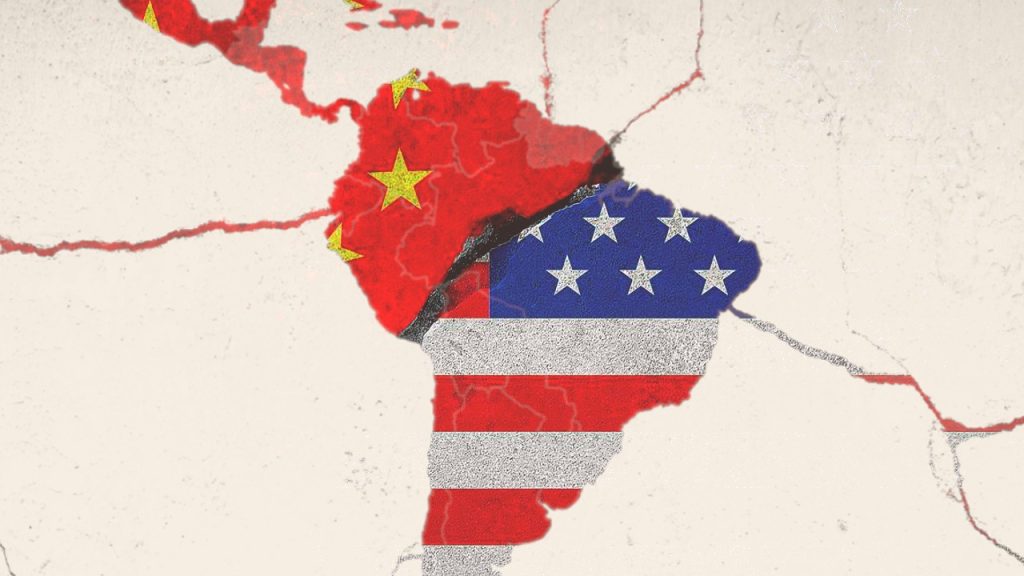
Russia’s invasion of Ukraine —indirectly underwritten by the People’s Republic of China (PRC) and with the Western response hampered by the threat of nuclear war— highlights a world transitioning away from the institutional, economic, and ideological order that has prevailed since the end of World War II. The transition will have significant and grave implications, and its dynamics are likely to be uneven, with the U.S. and democratic, market-oriented states likely to be some of the most adversely affected.
Climate Change and National Security

By: Edson Riveros Alemán (23/03/2022).
The negative effects produced by the increase in temperature on the planet have been observed with greater frequency and impact in Peru. The glacial retreat that is causing the decrease in water for human consumption -especially in the cities of the coast- and the increase in the periodicity of the El Niño phenomenon that impacts with excessive rains on the north coast of the country and great droughts in the area of the southern highlands are clear examples of what has been happening. From a human security perspective, these events are affecting the life and health of people and communities.
Scope and impact of the Russian invasion of Ukraine

By: Mariano López de Miguel (16/03/2022).
The Russian invasion of Ukraine in February 2022 surprised all Western foreign ministries. Although it is true that the war escalation had not ceased since December 2021, the European Union focused on the use of hydrocarbon supplies (mainly gas) as Moscow’s negotiating weapon with Kyiv. However, U.S. President Joseph Biden warned of increased warmongering rhetoric from the Kremlin and his Russian counterpart, Vladimir Putin.
The Impact of Russia’s Invasion of Ukraine on the Global Strategic Environment and Latin America

By: Evan Ellis (28/02/2022).
Modern history is punctuated by decisive events that both directly impact the strategic environment and change the calculations of global actors. Russia’s February 2022 invasion of the Ukraine is arguably one such event. The impact of the invasion on the global strategic environment, including Latin America and the Caribbean will be profound and principally negative for Western democracies and the global institutional order that has prevailed since World War II.
Modernization of the fixed-wing aircraft of the Peruvian Army: An urgent need

By: Yul Infantes Coronado (23/02/2022).
This article analyzes the reasons why the modernization of the equipment of the fixed-wing aircraft of the Peruvian Army is a critical factor for increasing security in the air operations of the Army Aviation.
Defense Sector Budget: Trends and impact of COVID-19
By: Luis Chávez Valdivia (15/02/2022).
This article analyzes the current economic situation facing the Defense Sheet and how it will be affected in the fulfillment of its objectives. Likewise, the budgetary behavior of the Defense Statement is observed to better understand the actions or reactions, as a prospective method that helps the administration to be able to face these challenges efficiently and achieve quality in budgetary spending.
Russia’s Latest Return to Latin America
By: Evan Ellis (01/02/2022).
Russia’s contemporary ability to project a presence in Latin America and the Caribbean is a function of several interdependent factors: (1) anti-U.S. populist regimes willing to work with it; (2) the enabling role of Chinese money; (3) the legacy of Russia’s Cold War military and other ties to the region; (4) key industries in which Russian activity and investment offers some value to the region, including military, nuclear, space, and petroleum industries, as well as its agricultural purchases; and (5) Russia’s information warfare capabilities.
“Belt and Road” Initiative in Peru: Impact, opportunities and challenges

By: Mario Caceres Solis (25/01/2022).
The “Belt and Road Initiative” (IFR) constitutes one of the most important strategies of the People’s Republic of China (PRC) to achieve economic hegemony and world leadership. At present, many countries -including Peru- negotiate and coordinate their entry and participation in this project in order to obtain benefits for their citizens; however, the existing asymmetry forces us to be better prepared to generate tangible benefits. In this regard, this article presents an evaluation of the impacts, opportunities and challenges that Peru will have in the face of what its participation in the IFR means, setting guidelines for obtaining expected results in a global environment of crisis and needs, as well as of struggles between the United States and the PRC for economic leadership.
Artificial Intelligence in National Security: Legal Limits

By: Jean Carlo Cuba (11/01/2022).
Terms such as big data, mechatronics and sensorization, decision making, neuromorphic computing and computer perception are some of the concepts and technologies integrated into National Security that are constantly evolving. These scientific advances have the existing national and international legislation as the only limit to avoid their indiscriminate use. In this sense, this article analyzes the current and possible uses of Artificial Intelligence as a means that are added to different attack and defense strategies within the framework of National Security, as well as whether the existing legislation to limit its use complies with its purpose.

