
Abstract
This article analyzes the strategic significance of neutralizing the military capabilities of the Túpac Amaru Revolutionary Movement (MRTA) and the Communist Party of Peru–Shining Path (PCP-SL), an event that consolidated the Peruvian state’s military victory over terrorism and brought an end to the armed phase on a national scale. It is argued that, although the terrorist phenomenon was defeated militarily, the conflict did not end but gave way to a phase of unconventional confrontation, characterized by political, ideological, legal, cultural, and narrative disputes driven by ideological remnants and affiliated networks. The research adopts a qualitative strategic-analytical approach, grounded in the historical study of Operations “Chavín de Huántar” (1997) and “Cerco” (1999), as well as in the strategic-doctrinal analysis of the subsequent period, complemented by the authors’ operational experience. The results confirm that the defeat of terrorism was decisive on the military front, as it dismantled its political-military leadership and irreversibly degraded its capacity for strategic action. However, the analysis shows that the absence of a comprehensive post-conflict strategy facilitated the ideological reorganization of radicalism, its convergence with illicit economies, and the emergence of hybrid threats. It is concluded that military victory must be consolidated through a comprehensive state response aimed at strengthening institutions, historical memory, and national security.
Keywords: terrorism; national security; MRTA; PCP-SL; narrative warfare; hybrid threats
Introduction
Between the 1980s and 2000s, Peru faced one of the most violent and destabilizing periods in its republican history, as a result of the systematic actions of terrorist organizations that sought to destroy the constitutional order through assassinations, ambushes, car bombs, infrastructure sabotage, forced indoctrination, and coercive control over entire populations.[1] This cycle of violence did not stem from a symmetrical confrontation between equivalent armed actors, but rather from a strategy aimed at weakening the authority of the State and subjugating the civilian population.[2] Consequently, it was not a war between “equivalent parties,” but rather a terrorist aggression directed against the Peruvian State, carried out primarily by two organizations: the PCP-SL and the MRTA.[3]
The PCP-SL, under the leadership of Abimael Guzmán Reynoso, alias “President Gonzalo,” launched a terrorist campaign with an openly totalitarian objective: to destroy the Peruvian state and replace it with the so-called “People’s Republic of New Democracy,”[4] conceived as a communist regime inspired by Marxism, Leninism, and a radical interpretation of Maoism adapted to the Andean context.[5] Its strategy was based on protracted people’s war, coercive territorial control, and the systematic elimination of any form of state or social authority that did not subordinate itself to its ideological project.[6] On the other hand, the MRTA, led by Víctor Polay Campos, alias “Comrade Rolando,” sought to impose a Marxist-Leninist project with strong Guevarist influence, particularly through insurgent foquismo and armed propaganda, prioritizing urban terrorism and actions with high symbolic impact.[7] Both organizations shared a converging strategic objective: to undermine institutions, weaken the state, and replace the democratic system with authoritarian-revolutionary regimes.
The captures of Abimael Guzmán Reynoso (September 12, 1992) and Víctor Polay Campos (June 9, 1992) constituted decisive strategic blows to the leadership structures of the PCP-SL and the MRTA. However, these events did not lead to the immediate collapse of their operational capabilities or the automatic disappearance of the subversive threat. In both cases, the organizations attempted to prolong the conflict by reorganizing remaining cadres and promoting new commanders with operational influence. In the PCP-SL, Óscar Ramírez Durand, alias “Comrade Feliciano,” assumed leadership of the faction that chose to continue the armed struggle, known in internal jargon as the so-called Left Liquidationist Line (LLI). Meanwhile, in the Upper Huallaga Valley, Florindo Eleuterio Flores Hala, alias “Comrade Artemio,” maintained a regional leadership that persisted as an armed remnant, amid the internal debate generated by proposals for negotiation and a “peace agreement.”[8] Within the MRTA, Néstor Cerpa Cartolini, alias “Comandante Evaristo,” established himself as the most visible leader following Polay’s capture, attempting to rebuild the organization and preserve its initiative through high-impact actions. Collectively, these leadership changes sought to maintain internal cohesion, reactivate commandos, and sustain violence as an instrument of political pressure, prolonging the aggression against the State and the population.
Faced with this scenario, the Peruvian State, through its Armed Forces (FF. AA.) and the National Intelligence System (SINA), carried out two decisive operations that marked the end of the military campaign against terrorism: Operation Chavín de Huántar (1997), which neutralized “Comandante Evaristo” and definitively eliminated the MRTA’s military and political capacity, and Operation Cerco (1999), which culminated in the capture of “Camarada Feliciano” and the dismantling of the PCP-SL’s last strategic-military command.[9] Both operations demonstrated the maturation of state intelligence, the operational superiority of the Armed Forces, and the effective recovery of the state’s legitimate monopoly on the use of force.
The neutralization of these two leaders constitutes the culminating point that marks the Peruvian State’s military victory over terrorism. This result had strategic, operational, and psychological effects, as it eliminated the political-military leadership of both organizations and shattered their capacity for armed regeneration.[10] This achievement also paved the way for a new phase of the conflict, characterized by the use of political, ideological, legal, and cultural mechanisms by front organizations, affiliated groups, and doctrinal remnants directly or indirectly linked to the former terrorist organizations. Since 2000, a systematic effort has been deployed to erode the legitimacy of state authority, question the actions of the Armed Forces of the United States (FF. , prosecute those who fought terrorism, reinterpret the role of the Truth and Reconciliation Commission (CVR), promote the reintegration of released prisoners under the narrative of “victims,” and foster legal political fronts associated with Shining Path, including the Movement for Amnesty and Fundamental Rights (MOVADEF).[11] At the same time, these sectors sought to expand their influence in universities, trade unions, non-governmental organizations (NGOs), and certain branches of the state apparatus, shaping a dispute over historical and institutional legitimacy.
As such, Operations “Chavín de Huántar” and “Cerco” represent not only the definitive end of the military offensive against terrorism, but also the threshold of a strategic transition, in which the confrontation ceased to be expressed primarily through the use of arms and shifted to the realm of historical narrative, institutional legitimacy, and the contest for political and cultural spaces. Understanding this transformation is essential for interpreting contemporary threats to national security and for consolidating a doctrine that recognizes that, although terrorism was defeated on the military front, its remnants continue to attempt to exert influence through indirect means characteristic of 21st-century hybrid threats.
The Neutralization of Néstor Cerpa Cartolini “Comandante Evaristo” (1997): Strategic Collapse of the MRTA
The neutralization of Néstor Cerpa Cartolini during the “Chavín de Huántar” military hostage rescue operation on April 22, 1997, represents one of the decisive strategic milestones in the defeat of terrorism in Peru. The death of its chief operational leader and the elimination of the MRTA detachment holding the hostages led to the immediate collapse of its organized military capacity. Unlike other insurgent groups that manage to regroup after the fall of a leader, the MRTA lacked structural depth, a consolidated alternate command structure, and a sufficient territorial base to sustain strategic continuity.[12] With Cerpa’s disappearance, the organization lost its doctrinal cohesion, its capacity for operational planning, and its symbolic value as an insurgent actor, becoming irreversibly disjointed and with no real possibility of rebuilding itself as a structured threat on the national stage.
Following the capture of Víctor Polay Campos in 1992, Cerpa assumed leadership of the MRTA amid an internal crisis that threatened to dissolve the organization. Unlike the PCP-SL—whose vertical and dogmatic structure allowed for some continuity even after the fall of its leaders—the MRTA lacked a rigid hierarchical organization and depended largely on the personal leadership of its commanders.[13] In this context, Cerpa became the movement’s last political and ideological leader, its primary operational and symbolic figurehead, and the one responsible for demonstrating—both to its militants and to the international community—that the organization still possessed the capacity for action and a viable revolutionary project.
Cerpa embodied the MRTA’s Marxist-Leninist orientation with a strong Guevarist influence, particularly in the adoption of insurgent foquismo as a method of political-military action. Under his leadership, the organization prioritized high-impact urban operations aimed at provoking political crises, gaining international visibility, and repositioning itself in the public eye as a relevant insurgent actor.[14] Unlike the PCP-SL’s strategy based on protracted people’s war and sustained territorial expansion, the MRTA opted for a model of confrontation centered on armed propaganda, selective kidnappings, and spectacular shock actions.[15] This approach prioritized symbolic and media impact over territorial control, which highlighted the organization’s structural limitations in terms of critical mass, social base, and logistical depth. The seizure of the Japanese ambassador’s residence in December 1996 constituted the culminating expression of this operational logic. The action sought to demonstrate planning and execution capabilities, force political negotiations, and project the image of a cohesive organization; however, strategically, it revealed its structural weakness by concentrating its last significant operational core into a single operation.[16] The state’s response, carried out in April 1997, transformed that attempt at repositioning into the culmination of its definitive defeat.
The hostage-taking also constituted the final gamble of a terrorist organization lacking any real capacity for military replenishment, sustainable financing, or a significant social base. The MRTA played its last strategic card in an action that ultimately became its definitive breaking point.[17] The state’s response, carried out in Operation Chavín de Huántar on April 22, 1997, constituted a forceful demonstration of operational capability, effective integration of strategic and tactical intelligence, and mastery of military tactics applied to special forces operations. The success of the assault was the result of meticulous planning, specialized training, and sustained interagency coordination over time. Likewise, it expressed an unequivocal political intent and will in the face of the subversive threat: “There is no negotiating with terrorism.”[18] This decision reaffirmed the principle of state authority and the preservation of the legitimate monopoly on the use of force, preventing the terrorist organization from turning the mass hostage-taking into a platform for political legitimization. In strategic terms, the operation allowed for regaining the initiative, neutralizing the enemy’s decision-making core, and eliminating the MRTA’s last remaining capacity to project itself as an insurgent actor of national significance.[19] Consequently, the synchronization between intelligence, planning, and tactical execution demonstrated a level of institutional maturity unprecedented until then. The release of the hostages, the regaining of control of the facility, and the total neutralization of the MRTA command represented a complete victory on the tactical, operational, and strategic levels.
With Cerpa’s death, the MRTA was left without political leadership, without mid-level cadres possessing internal legitimacy, and without the organizational capacity to reconstitute itself. Its disappearance meant the loss of the strategic axis that held the organization together and led to its immediate collapse; there were no active military fronts left, no commanders capable of reorganizing, no social bases that would enable an insurgent resurgence, and no sources of funding or sustained territorial presence.[20] Since 1997, the MRTA ceased to be a military threat and became a disjointed ideological remnant, devoid of any real capacity for strategic influence.
The operation confirmed the full validity of the Peruvian State’s legitimate monopoly on the use of force. The country demonstrated that it could successfully address complex situations related to terrorism, that it possessed an intelligence structure capable of anticipating and neutralizing critical threats, and that it had elite special forces capable of executing precision operations in highly sensitive environments.[21] Operation “Chavín de Huántar” not only had immediate military effects but also established a far-reaching deterrent effect, enhancing Peru’s prestige and becoming a doctrinal benchmark for special operations in the region.
The strategic impact of the operation was profound: it strengthened public confidence in the Armed Forces, shaped a national narrative of victory, and allowed the State to regain the initiative and legitimacy in managing internal crises. State authority was reaffirmed in the face of terrorist coercion, and a clear deterrent precedent was established: Peru would not negotiate under pressure, terrorist actions would not yield political concessions, and no organization could exploit international public opinion to gain strategic advantages.[22] Since then, there has been no further politically motivated terrorist hostage-taking in the country. The neutralization of Cerpa definitively dismantled the MRTA’s claim to present itself as an urban guerrilla group or revolutionary movement, exposing it for what it truly was: a terrorist organization without popular support or political viability, whose methods sought only to generate chaos and destabilization. This strategic victory, combined later with the capture of “Feliciano,” meant that by the year 2000 the military dimension of terrorism had been completely defeated and paved the way for the subsequent phase, marked by political, ideological, and cultural conflict.
The Capture of Óscar Ramírez Durand “Feliciano” (1999): Collapse of Shining Path’s Strategic-Military Command
The capture of Óscar Ramírez Durand, alias “Feliciano,” in July 1999 dealt the final blow to the ideological, political, and military leadership of the PCP-SL, an event that sealed the organization’s definitive inability to operate as a structured terrorist group with strategic reach. Following the capture of Abimael Guzmán in 1992, the movement experienced a profound leadership crisis that threatened to fragment it completely. Under these circumstances, Feliciano assumed Shining Path leadership in sectors of the central highlands, among the valleys of the Apurímac, Ene, and Mantaro rivers (VRAEM), while Florindo Eleuterio Flores Hala, alias “Comrade Artemio,” exercised leadership in the Upper Huallaga Valley.[23] Of the two leaders, Feliciano established himself as the sole leader with effective authority over the remaining operational units and as the last leader capable of sustaining the continuation of violence under the Maoist principles that guided the original strategy of the PCP-SL.
In the years following Guzmán’s fall, Feliciano consolidated his position as the operational heir to the Maoist project, upholding the slogan of prolonging the war and directly opposing the “peace agreement” line promoted by Guzmán from prison. This stance generated an internal doctrinal split by rejecting the symbolic authority of the historic leader and assuming a leadership based primarily on armed coercion.[24] His influence over the subversive columns within the VRAEM allowed him to preserve, albeit precariously, an insurgent structure that still carried out ambushes, targeted assassinations, and acts of sabotage, in addition to keeping indigenous communities in hard-to-reach rural areas under coercion.[25] Under this leadership, the PCP-SL maintained a minimal level of doctrinal and operational cohesion sufficient to prolong the violence and project the appearance of revolutionary continuity, even as its social base, ideological legitimacy, and strategic capacity were in rapid decline.
Feliciano’s capture signaled the immediate collapse of the PCP-SL’s military center of gravity. The subversive structure was left without leadership capable of exercising command and control, without doctrinal guidance to give political meaning to the armed struggle, and without the capacity to coordinate actions in a coherent manner at the national level.[26] This leadership vacuum led to a functional collapse, leaving the remaining Shining Path members without internal cohesion or any real possibility of reorganizing into a political-military structure. Consequently, the loss of their leader caused the disintegration of rural detachments, the definitive breakdown of internal discipline, and the disappearance of the PCP-SL as an organized insurgent force.
Without a doctrinal reference capable of interpreting and projecting the so-called “Gonzalo thought,” the remaining militants were left without political guidance or a strategic horizon. At the same time, this ideological collapse coincided with an accelerated shift toward illicit economies, fueled by the absence of a viable political project, sustained pressure from law enforcement, and the existence of drug trafficking corridors previously established in the VRAEM.[27] Thus, the residual structure, stripped of its original revolutionary purpose, gradually drifted toward criminal activities such as illicit drug trafficking (IDT) and other associated illegal economies. This process marked the transformation of the PCP-SL, which went from being a terrorist organization with aspirations for political transformation to becoming a criminal remnant, a phenomenon that gave rise to the contemporary dynamics of narco-terrorism in the VRAEM.
The impact of Feliciano’s capture was decisive for the PCP-SL, as it destroyed its strategic center of gravity and eliminated any possibility of organizational regeneration. Unlike insurgencies with more flexible structures, the PCP-SL depended on a strictly vertical chain of command and a rigid doctrine, incapable of surviving without ideologically legitimized leadership.[28] Feliciano’s fall left the organization without cadres possessing the doctrinal grounding to lead it, without a social base to support it, and with virtually no capacity to recruit new members with political conviction. From a strategic perspective, his capture irreversibly closed the last window for any attempt to reactivate the armed struggle in Peru and shifted the conflict from the military dimension to the political, legal, and narrative spheres.
Operation “Cerco,” which enabled the gradual tracking of Óscar Ramírez Durand in the central jungle of the department of Junín and culminated in his capture on July 14, 1999—as he attempted to evade the security cordon by traveling in a minibus between Cochas Grande and Cochas Chico, in Huancayo—constituted a tactical victory of high operational value and, at the same time, a strategic turning point.[29] The neutralization of the main leader of the Shining Path faction that persisted in armed struggle dismantled the last structure with real command and control capacity in the central highlands and marked the effective end of the terrorist threat as a structured insurgent phenomenon with national reach.
With the elimination of its last military leader capable of exercising command, the Peruvian state consolidated its military victory over the PCP-SL. Feliciano’s capture confirmed the supremacy of state intelligence, strengthened territorial control, and left the movement without leadership, without doctrine, and without the capacity for strategic action.[30] Similarly, this arrest completely shattered any possibility of unified national leadership among the remaining Shining Path members, leaving the Quispe Palomino clan as the predominant armed core in the VRAEM region, under the leadership of Víctor Quispe Palomino, alias “Comrade José.” This structure later renamed itself the Militarized Communist Party of Peru Marxist-Leninist-Xiist (MPCP-MLX).[31] However, what remained was not a revolutionary organization with a national political project aimed at seizing power, but rather a territorially based armed structure progressively subordinated to illicit economies—primarily the TID—and lacking the capacity to organize a structured insurgency at the national level, which demonstrates a shift from ideologically driven subversion toward a criminalized configuration with residual political rhetoric.[32] This outcome symbolizes the culmination of the joint effort by the Armed Forces and the Peruvian National Police (PNP), which made it possible to restore internal order, dismantle the Shining Path leadership, and definitively bring the military phase of terrorism in the country to a close.
Joint Result: The Peruvian State Wins the Military Campaign in the War on Terrorism
The neutralization of Néstor Cerpa Cartolini in 1997 and the capture of Óscar Ramírez Durand, alias “Feliciano,” in 1999, together constitute the culmination of the Peruvian State’s military campaign against terrorism.[33] Beyond their individual tactical or operational significance, these events represent a comprehensive strategic victory, manifested in the irreversible dismantling of the political-military leadership of the MRTA and the PCP-SL, as well as in the definitive end of armed struggle as a viable mechanism for contesting power in Peru.
From a strategic perspective, this victory should not be interpreted as the simple sum of successful operations, but rather as the expression of a consolidated institutional process through which the state regained the initiative, imposed decision-making superiority, and effectively reestablished the legitimate monopoly on the use of force.[34] The defeat of terrorism was structural and not merely symbolic: with the disappearance of leadership and the collapse of the command-and-control system, the core of ideological and organizational cohesion was destroyed, irreversibly closing off any possibility of armed reconstitution.
Another strategic consequence of this outcome was the definitive end of terrorism as a rational actor in political negotiations. With the elimination of their main leaders and the complete loss of their military viability, both the MRTA and the PCP-SL lost the ability to impose conditions, force dialogue, or attract international mediation.[35] In this way, the Peruvian state nullified the use of violence as a political instrument and rejected any claim of equivalence or recognition of terrorism as a belligerent actor, thereby closing off any possibility of external legitimization. From then on, the remaining demands were stripped of coercive power and reduced to the discursive and ideological plane.
The end of the armed conflict produced an additional political-strategic effect of great significance. As the military centers of gravity of terrorist organizations disappeared, the conflict ceased to be expressed primarily on the military plane and began to shift toward other domains of confrontation. In this sense, the state’s military victory did not imply the end of the conflict, but rather a transition to a new stage characterized by unconventional disputes in the political, ideological, legal, cultural, and narrative spheres.[36]
From a historical-strategic perspective, this combined outcome represents a twofold milestone. On the one hand, it confirms that terrorism was comprehensively defeated on the military front;[37] on the other, it defines the strategic threshold beyond which the threat transforms and compels the state to adopt differentiated responses, going beyond purely military solutions.[38] Coming to terms with this turning point is essential for interpreting the phenomenon’s subsequent trajectory and for preventing a fully consolidated military victory from translating, through strategic oversight, into political and institutional fragilities during the post-conflict period.
The Strategic Transition (2000–2001): The Continuation of War by Other Means
Once the possibility of political negotiation had been closed off and armed violence rendered ineffective, the confrontation did not disappear; on the contrary, it shifted to unconventional domains, where the dispute over legitimacy, historical memory, and institutional influence replaced direct military confrontation.
The Peruvian state’s military victory over terrorism did not mean the conflict had ended—a common occurrence in irregular conflicts where an insurgent actor is defeated on the battlefield. Beginning in 2000, a new phase of confrontation began, one that was less visible yet equally complex: the transition from terrorism to forms of political, ideological, legal, and cultural dispute.[39] Various organizations, collectives, and legal fronts directly or indirectly linked to the PCP-SL and the MRTA reconfigured their methods of action, abandoning the systematic use of armed violence and resorting to institutional, narrative, legal, and sociocultural mechanisms with the aim of repositioning radical agendas, gradually eroding state legitimacy, and opening spaces of political influence for their operatives.
One of the first components of this transition focused on the progressive questioning of the institutional legitimacy of the Armed Forces, driven by certain political, media, and academic sectors that promoted critical narratives regarding state conduct during the period of internal violence. In this context, the thesis of expanded state responsibility gained traction; in some cases, this tended to establish a moral equivalence between the constitutional actions of the Armed Forces and the systematic crimes perpetrated by terrorist organizations.[40] This narrative approach influenced certain segments of public opinion, eroding the moral, legal, and symbolic legitimacy of the institutions responsible for ensuring internal order and affecting the doctrinal cohesion of the national security system.
At the same time, a sustained process of prosecution unfolded against military personnel who participated in the fight against terrorism, in a context where the period of violence was progressively framed under the legal category of internal armed conflict and subjected to expansive interpretations of criminal law and International Humanitarian Law (IHL). In certain cases, previously concluded investigations were reopened, and new legal assessments were applied to events that occurred decades earlier, which generated a perception of legal uncertainty across broad institutional sectors.[41] From a strategic perspective, this phenomenon impacted institutional morale, affected confidence in state support, and created uncertainty regarding the scope of functional responsibility in scenarios of high operational complexity, with potential effects on future willingness to carry out missions in high-risk contexts.
Another component of this transition was linked to the dispute over the meaning and public use of the CVR’s Final Report. Although its formal mandate was to clarify the events that occurred during the period of violence and formulate recommendations aimed at national reconciliation, certain sectors used its conclusions as a basis for a critical reinterpretation of state actions, emphasizing institutional responsibilities within the framework of the conflict. In some forums of debate, this interpretation projected a moral equivalence between the state’s constitutional defense actions and the systematic violence perpetrated by terrorist organizations.[42] These interpretations influenced public perception regarding the legitimacy of the use of force in defense of the constitutional order and generated doctrinal tensions within the national security system, particularly in academic, cultural, and youth circles where historical memory remains a subject of controversy.
Simultaneously, a process took place involving the release from prison, the granting of prison benefits, and compensation to individuals convicted of terrorism, which facilitated the political and social reintegration of ideological actors who joined NGOs, universities, unions, student associations, and human rights groups, as well as “struggle fronts” linked to the defense of the coca leaf and illegal mining.[43] From these legal spaces, radical discourses were rearticulated under new forms of legitimacy, facilitating processes of infiltration into unions, universities, and institutions, the capture of strategic union spaces, and the presence of actors with extremist ideological orientations within public entities.
This process formed the basis for the creation of legal fronts such as MOVADEF, an organization that sought the political registration of Shining Path ideology and promoted a general amnesty for individuals convicted of terrorism, as well as other groups that operated as platforms for indoctrination and political agitation.[44] At the same time, the Shining Path remnant underwent a functional transformation toward organized crime, particularly in the VRAEM, where it linked up with the TID, illegal mining, and other related criminal activities.[45] This convergence consolidated highly violent narco-terrorist structures, creating a hybrid threat in which terrorist, criminal, and economic components converge under a single operational logic.
In this new landscape, radical organizations adopted tactics associated with what various authors refer to as “dissipative molecular revolution,” characterized by the fragmentation of conflict, the generation of micro-violence, the instrumentalization of social movements, and the activation of low-intensity yet highly persistent internal conflicts.[46] Through violent protests, digital agitation, disinformation networks, and the recruitment of vulnerable groups, the aim was to undermine governance, overwhelm the state’s response capacity, and erode institutional stability.[47] This dynamic was facilitated by the absence of a comprehensive post-conflict strategy, in a context marked by the structural weakening of the state and limited coordination between security, development, and political legitimacy.
Consequently, the strategic transition of terrorism marked the beginning of—in the words of Carl von Clausewitz—“the continuation of war by other means,”[48] a scenario in which guns were replaced by rhetoric, litigation, ideological propaganda, social manipulation through victimization, and alliances with criminal networks.[49] Although the military campaign had been won, the country entered a phase in which threats became more diffuse, adaptive, and complex, capable of eroding the state from within without resorting to direct armed confrontation.
The New War: Political, Ideological, Legal, Cultural, and Narrative
With the military defeat of terrorism, the conflict did not end; on the contrary, it took on new forms of confrontation. Since 2000, actors linked—directly or indirectly—to former terrorist organizations, as well as sectors of the radical left, realized that the armed path had lost its viability and redirected their efforts toward a political, ideological, legal, cultural, and narrative struggle, aimed at contesting the meaning of history, redefining collective memory, and eroding the legitimacy of the state.[50] This strategic shift stemmed from the recognition that the use of armed violence had failed as a means of gaining power; however, this did not imply abandoning the original political objectives, but rather reformulating them through non-armed means.[51]
One of the most sensitive areas of this confrontation is the dispute over historical memory, used to reinterpret the actions of terrorism and shift responsibility onto the state.[52] Through academic discourse, cultural productions, media platforms, and political activism, attempts have been made to promote the idea that what occurred in Peru constituted an “internal armed conflict” between equivalent actors and that the Armed Forces were merely an additional participant in the confrontation. This characterization is conceptually inaccurate and strategically serves the ideological remnants of terrorism, as it dilutes the criminal nature of such organizations, obscures the systematic nature of the terror inflicted on the civilian population, and calls into question the legitimacy of the State’s constitutional use of force.[53]
In this scenario, the psychological dimension of the confrontation takes on relevance; it is not waged through conventional weapons, but rather through meanings, symbols, narratives, and emotions, unfolding in schools, universities, social media, the media, and cultural spaces.[54] Its purpose is to challenge common sense, shape collective perceptions, alter historical memory, transform the aggressor into a victim, and portray the State as the perpetrator, while terrorism is presented as a political actor advancing supposedly legitimate demands. The dissemination of narratives associated with the “internal armed conflict,” the “rights-violating state,” and “political victims” follows this logic, aimed at replacing the recognition of terrorism as a criminal phenomenon with an interpretation of symmetrical confrontation that weakens the national security doctrine and discredits the institutions responsible for preserving the constitutional order.
Simultaneously, a legal confrontation unfolded, accompanied by processes of institutional takeover, through which networks linked to radical agendas infiltrated the state bureaucracy, human rights organizations, university faculties, labor unions, and spaces of social representation. From certain political and legal spheres, regulatory reforms, judicial activism, and strategic litigation were promoted, aimed at revising or restricting the legal framework applied during the fight against terrorism. In some cases, these initiatives challenged legal and operational instruments that had been decisive in the military defeat of subversive organizations.[55] Beyond the legitimate debate on human rights standards and institutional oversight, the cumulative effect of these dynamics led to a perception among sectors of the security forces of reduced state support and greater exposure to subsequent liability.[56] This process eroded state authority, reduced its room for maneuver in the face of complex internal threats, and contributed to a climate of institutional self-restraint regarding the legitimate use of force.
In this situation, the doctrine developed by Antonio Gramsci took on a significant role. His emphasis on the conquest of cultural hegemony rather than political power was functionally appropriated by radical movements that sought to influence the formation of collective perceptions, especially among youth, student, and community sectors.[57] Appropriating the language of social demands, adopting popular causes, politically victimizing oneself, and reinterpreting the historical narrative made it possible to build bases of support where none previously existed, weakening the idea of citizenship, fragmenting national identity, and eroding social cohesion—conditions that increase the state’s vulnerability to processes of polarization and institutional capture.
The new dynamic of confrontation also manifested itself in convergence with illicit economies, particularly in drug trafficking corridors and areas affected by illegal mining.[58] The perception of the progressive weakening of law enforcement and the erosion of state authority created opportunities for organized crime, facilitating coordination between radical ideological remnants, criminal interests, and illicit financing.[59] This process gave rise to a hybrid threat that combines radical political discourse, illicit economies, and fragmented violence, creating a scenario conducive to the expansion of Transnational Organized Crime (TOC) in various regions of the country.[60]
The interaction of these factors produced an environment associated with dynamics described as a “molecular revolution,” characterized by simultaneous protests, micro-violence, induced conflicts, and political agendas concealed beneath seemingly legitimate sectoral demands.[61] The strategic purpose of these actions is not the immediate seizure of power, but rather the sustained erosion of governance, the delegitimization of state authority, and the opening of institutional fissures that facilitate the capture of territories, economies, and decision-making spaces.[62]
Peru faces a protracted confrontation of a political, ideological, legal, cultural, and narrative nature, in which the ideological remnants of terrorism and various radical actors seek to replace armed conflict with a dispute centered on cultural hegemony, historical memory, and the legitimacy of the state. Although the military campaign was won, the political dispute remains open, and its outcome will directly affect the state’s strength or vulnerability in the face of contemporary hybrid threats, particularly COT.
Strategic Discussion: Implications of Military Victory and the Post-Conflict Period
The military defeat of terrorism allowed for the continuation of the country’s democratic political system, the restoration of territorial control, and the neutralization of the operational capacity of the PCP-SL and the MRTA; however, the conflict did not end in its political, ideological, and cultural dimensions.[63] Peru demonstrated its ability to prevail militarily; however, it revealed a structural weakness by failing to develop in a timely manner a comprehensive post-conflict strategy aimed at countering the reorganization of radicalism through non-military means. This strategic omission ushered in a new phase of unconventional confrontation.
The phase that began in 2000 revealed that the ideological remnants of terrorism adopted an approach centered on cultural and political dispute, in which public narrative, legal litigation, institutional infiltration, and the instrumentalization of social demands progressively replaced the use of armed violence.[64] Once the military capacity of terrorist organizations had been destroyed, the center of gravity of the conflict shifted to the realm of legitimacy, and various radical actors sought to preserve their influence by eroding state authority and reinterpreting recent history in accordance with their political interests.
The core of this stage can be described as a dispute over the public narrative of the period of violence, in which certain actors promoted interpretations aimed at reconfiguring the political significance of the military defeat of terrorism. By relativizing responsibilities and questioning the state’s constitutional response, a climate of distrust toward law enforcement and the legitimacy of using force to defend democratic order was generated in certain sectors of society.[65] This dynamic influenced public perception of the National Security and Defense doctrine, weakening its symbolic and institutional capital. The cumulative effect was far from neutral: as the legitimacy of those exercising the constitutional monopoly on force eroded, the State’s deterrent capacity was reduced and its scope for action in the face of internal and emerging threats was narrowed.
In turn, the occupation of institutional spaces by radicalized groups allowed them to influence the educational system, labor unions, and various public agencies, shaping agendas, discourses, and regulatory frameworks. Added to this was the convergence of ideological remnants and illicit economies, particularly in areas such as the VRAEM, where terrorism underwent a mutation toward criminal structures that combine violence, propaganda, and illegal financing.[66] This phenomenon reflected a functional transition from ideological extremism to organized crime, in an environment where the absence of a state stabilization strategy facilitated the consolidation of hybrid threats.
In this scenario, threats evolved into hybrid forms characterized by the convergence of social unrest, criminal interests, ideological infiltration, and narrative disputes.[67] The sustained weakening of law enforcement and the erosion of state authority created conditions of systemic vulnerability that were subsequently exploited by the COT, which found a favorable environment in territories with limited state presence, high levels of informality, and deep social fractures.[68]
The main strategic lesson is clear: winning the military campaign of an irregular war does not guarantee stability if the state does not simultaneously secure political, cultural, and narrative victory. Upon concluding the military campaign against terrorism, a phase of stabilization, institutional consolidation, and transition toward development should have begun, particularly in the areas most affected by violence; but this process was not carried out in a systematic or sustained manner.[69] Peru defeated armed terrorism, despite failing to consolidate a comprehensive post-conflict doctrine that would prevent the ideological reorganization of its remnants. Closing this gap is now a strategic imperative that requires strengthening national identity, protecting historical memory, reaffirming the legitimacy of institutions, and bolstering the state’s capacity to confront unconventional threats in an increasingly complex environment.[70]
Conclusions
The operations that neutralized Néstor Cerpa Cartolini, “Comandante Evaristo,” and captured Óscar Ramírez Durand, “Camarada Feliciano,” marked the culmination of the military defeat of terrorism in Peru. The elimination of the last political-military leaders of the MRTA and the PCP-SL irreversibly dismantled their command-and-control system, nullifying their ability to sustain a protracted war or reactivate an insurgent strategy on a national scale. As a result, the State regained the strategic initiative, reestablished its legitimate monopoly on the use of force, and consolidated its territorial presence against organizations that had sought to destroy the constitutional order through systematic terror against the civilian population.
The military defeat of these organizations did not, however, mean the end of the conflict. Beginning in 2000, the confrontation underwent a strategic transition toward unconventional forms, in which actors linked to ideological radicalism sought to reposition themselves through political, legal, cultural, and narrative means. In this new scenario, the dispute shifted from control of territory to the realm of legitimacy, turning historical narrative, collective memory, and the interpretation of the period of internal violence into central arenas of confrontation, frequently linked to illicit economies and dynamics of social unrest.
The Peruvian experience demonstrates that military victory, even when decisive at the operational level, does not by itself guarantee the state’s lasting stabilization. The strategic consolidation of such a victory requires comprehensive policies aimed at strengthening democratic institutions, preserving historical memory, reaffirming the legitimacy of law enforcement agencies, and preventing the ideological reorganization of radical remnants or their convergence with criminal structures. In the absence of a comprehensive post-conflict strategy, spaces of political, cultural, and narrative dispute can become arenas for the progressive erosion of state authority.
Consequently, the main strategic lesson from the Peruvian case is that the military defeat of terrorism must be accompanied by a sustained process of institutional consolidation, strengthening of national identity, and protection of the democratic order. Only through a coordinated state response—capable of integrating security, political legitimacy, and social cohesion—will it be possible to transform the military victory achieved in the past into a lasting strategic victory against the hybrid threats of the 21st century.
About the Authors
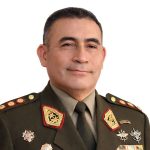
Oscar Luis Calle Pérez
Major General of the Peruvian Army (EP), in the Infantry Branch, a member of the Special Forces (FF. EE.), and a specialist in Command, with extensive experience in strategic planning, operational leadership, intelligence, military education, and international cooperation—areas closely linked to the research and analysis priorities of the Peruvian Army’s Center for Strategic Studies (CEEEP). Academically, he holds a Ph.D. in Business Administration from Alas Peruanas University (UAP), a Master’s degree in Finance from EADA Business School (Spain), and Master’s degrees in Public Management and Business Administration, with a concentration in General Management, from ESAN University; he also completed a Master’s degree in Military Sciences at the Army War College – Graduate School (ESGE-EPG). His professional development includes the Peruvian Army’s High Command Course and certificate programs in Defense Policy, Intelligence, National Defense and Security, Human Resources Management, and Finance. His professional development includes the Peruvian Army High Command Course and certificate programs in Defense Policy, Intelligence, Defense and National Security, Human Resources Management, and Finance—studies that strengthen his capacity for comprehensive threat analysis, the formulation of defense strategies, and the coordination of security, governance, and development. Throughout his career, he has held positions of high responsibility in operational commands, intelligence agencies, military educational institutions, and international representative bodies, notably serving as Head of the Peruvian Delegation to the Inter-American Defense Board of the Organization of American States (OAS). Among these responsibilities, the positions of Commander of the Joint Intelligence and Special Operations Command (CIOEC) and Chairman of the Joint Chiefs of Staff of the VRAEM Special Command (CE-VRAEM) stand out, roles from which he contributed to the planning and conduct of operations against threats to national security. His operational experience includes participation in counterterrorism operations in the Huallaga theater of operations and in the Apurímac, Ene, and Mantaro river valleys (VRAEM), decisive theaters in the Peruvian State’s response to this threat. In the field of military training, he directed the Army’s Infantry School and Parachute School, also serving as academic deputy director of the Chorrillos Military Academy (EMCH), where he contributed to the doctrinal and professional training of new generations of officers. His operational career includes his participation as a distinguished defender of the homeland during the Upper Cenepa Conflict (1995) and as a distinguished defender of democracy in the “Chavín de Huántar” Hostage Rescue Operation, landmark events in the defense of national sovereignty and in the Peruvian government’s fight against terrorism. In recognition of his outstanding work, he has been awarded the Peruvian Cross of Military Merit in its various grades, the Francisco Bolognesi Military Order in the rank of Knight, and the War Cross for Military Valor. He currently serves as Commander General of the II Army Division and the Central Operational Command (COC).
Manolo Eduardo Villagra
He holds a Ph.D. in Development and Strategic Security from the Center for Advanced National Studies – Graduate School (CAEN-EPG). His academic and professional career focuses on the strategic study of national security, emerging threats, and state planning in response to complex challenges affecting the country’s stability and governance. He holds master’s degrees in Military Sciences, with a concentration in Strategic Planning and Decision-Making; in Management and Technological Innovation; and in Education Sciences. He holds bachelor’s degrees in Military Sciences and Administration, and has completed certificate programs in National Security and Defense; Leadership and Strategic Planning; and Military History and Strategic Thinking. He is the author of the book Peru Under Attack: Comprehensive Strategy Against Transnational Organized Crime, a work of strategic analysis that examines the expansion of organized crime as a structural threat to national security and proposes a comprehensive strategic response by the state, which coordinates legal, institutional, and operational instruments to confront the expansion of transnational organized crime. He has completed specializations in Global Challenges, Cybersecurity, Public Policy, and Governance at the Steven J. Green School of International and Public Affairs at Florida International University (U.S.). In addition, he received the Academic Defense Medal with “Honor” honors after ranking first in the 18th Joint Command and Staff Program at the Joint Higher School of the Armed Forces (ESCOFFAA). He serves as principal researcher at the Peruvian Army Center for Strategic Studies (CEEEP) and is a researcher at the “Maj. Gen. José del Carmen Marín Arista” Research Institute (IIGMA) of the Center for Advanced National Studies – Graduate School. He is also a professor, lecturer, and advisor on issues of strategy, foresight, geopolitics, threats to national security, and strategic planning for development, with a sustained academic output in the field of national security and defense. The combination of operational experience and research has enabled him to analyze and understand national security issues firsthand in various strategic areas of the country, particularly in zones affected by illegal economies, cross-border dynamics, and hybrid threats. In the field of strategic research, he has conducted studies on security issues in Putumayo and other border areas, as well as geopolitical research on the strategic dynamics that affect the stability of the national territory. In the operational field, he participated in counterterrorism operations in the Upper Huallaga (2002–2005) and in the Apurímac, Ene, and Mantaro River Valley (VRAEM) (2013–2014), as well as in military actions against illegal mining in Madre de Dios (2019). He also served as a Ground Operations Officer on the Joint Staff of the VRAEM Special Command (2023). During 2024 and 2025, he served in the Puno region, a strategic area characterized by its cross-border dynamics, the presence of illegal economies, and the sociocultural complexity of the Peruvian highlands. He is currently serving at the Headquarters of the II Army Division in the city of Lima.
Endnotes
- Peruvian Army, “In the Name of Truth,” 2010. ↑
- Rafael Calduch, “Subversive War and Terrorism,” CEURA, Madrid, 1993, 1–57, https://www.ucm.es/data/cont/media/www/pag-55160/lib2cap6.pdf. ↑
- Manolo Eduardo Villagra, “The Armed Forces in Light of the Conclusions of the Truth and Reconciliation Commission (CVR),” vol. 9, no. 10 (2022), https://www.esffaa.edu.pe/wp-content/uploads/2022/08/ARTICULO-FFAA-a-la-luz-de-las-conclusiones-de-la-CVR.pdf. ↑
- Santiago Roncagliolo, The Fourth Sword: The Story of Abimael Guzmán and Shining Path (Lima: Debate, 2017). ↑
- Víctor Quechua, Peru… 13 Years of Disgrace, 2nd ed. (Lima, 1994). ↑
- Jerónimo Ríos Sierra, “Shining Path: An Apology for Violence,” Revista de Cultura de Paz 2 (2018), https://revistadeculturadepaz.com/index.php/culturapaz/article/view/22/16. ↑
- Mario Miguel Meza Bazán, “The Túpac Amaru Revolutionary Movement (MRTA) and the Sources of Revolution in Latin America” (thesis, El Colegio de México, 2012), https://repositorio.colmex.mx/concern/theses/9s1616520. ↑
- Peruvian Army, “In Honor of the Truth.” ↑
- Documentation and Research Center (CDI), “Operation Cerco and the Capture of Comrade Feliciano,” 2026, https://lum.cultura.pe/cdi/fotografia/la-operacion-cerco-y-la-captura-del-camarada-feliciano. ↑
- Andrés Gómez de la Torre Rotta and Arturo Medrano Carmona, “Origins and Evolution of Subversion and Counterintelligence in Peru, 1958–2015,” URVIO. Latin American Journal of Security Studies 26 (2020): 57–71, https://revistas.flacsoandes.edu.ec/urvio/article/view/4223. ↑
- Esteban Valle-Riestra, “The Path of MOVADEF: From Armed Struggle to Political Participation,” Ideele Journal No. 227 (2013), https://revistaideele.com/ideele/content/el-sendero-del-movadef-de-la-lucha-armada-la-participaci%C3%B3n-pol%C3%ADtica. ↑
- Ricardo Aníbal Benavides Febres, “An Analysis of the Influence of Non-Military Factors on Military Factors in the Chavín de Huántar Hostage Rescue Operation,” 2012, https://apps.dtic.mil/sti/tr/pdf/ADA581031.pdf. ↑
- Ariel Álvarez Rubio, “Hostage-taking as an act of international terrorism. Analysis of the ‘Chavín de Huántar’ rescue operation,” Journal of International Relations, Strategy, and Security 10, no. 2 (2015), https://doi.org/10.18359/ries.578. ↑
- Miguel La Serna, With the Masses and the Weapons: Rise and Fall of the MRTA, vol. 61 (Lima: Institute of Peruvian Studies, 2023). ↑
- Carlos Iván Degregori, “An Unfinished Story,” DESCO, n.d., https://www.desco.org.pe/recursos/sites/indice/339/1081.pdf. ↑
- Ricardo Aníbal Benavides Febres, “An Analysis of the Influence of Non-Military Factors on Military Factors in the Chavín de Huántar Hostage Rescue Operation,” 2012, https://apps.dtic.mil/sti/tr/pdf/ADA581031.pdf. ↑
- Nicolás de Bari Hermosa Ríos, “Operation Chavín de Huántar. Rescue at the Japanese Embassy Residence” (Lima, 1998). ↑
- Ibid. ↑
- Adán Doria Velarde, “The Significance of Intelligence Activities in Hostage Rescue Operations: The Chavín de Huántar Case” (thesis, 2016), https://tesis.pucp.edu.pe/items/d0798e75-236f-4d42-9c5e-69cf845e377d. ↑
- Miguel La Serna, With the Masses and the Weapons: Rise and Fall of the MRTA, vol. 61 (Lima: Institute of Peruvian Studies, 2023). ↑
- César Astudillo Salcedo, “Chavín de Huántar: The Legacy 1997–2019,” 2019, http://bibliotecaep.mil.pe/wp-content/uploads/2020/01/CHAVIN_DE_HUANTAR_EL_LEGADO_compressed.pdf. ↑
- Ariel Álvarez Rubio, “Hostage-Taking as an Act of International Terrorism: An Analysis of the ‘Chavín de Huántar’ Rescue Operation,” Journal of International Relations, Strategy, and Security 10, no. 2 (2015), https://doi.org/10.18359/ries.578. ↑
- Aníbal Cueva López, “Shining Path in the VRAEM: Former Terrorist Organization or New Drug Cartel?”, 2015, https://www.esffaa.edu.pe/wp-content/uploads/2020/10/LIBRO-SENDERO-LUMINOSO-EN-EL-VRAEM.pdf. ↑
- Place of Memory, Tolerance, and Social Inclusion (LUM), “Feliciano lashed out at Abimael Guzmán, whom he hates for the peace agreement with Fujimori,” video, 3:03, 2003, https://lum.cultura.pe/cdi/video/feliciano-arremetio-contra-abimael-guzman-quien-odia-por-el-acuerdo-de-paz-con-fujimori. ↑
- Miguel Ángel Gonzales Bojórquez, Oscar Luis Calle Pérez, Rolando Enrique Campos Hashimoto, and Manolo Eduardo Villagra, “Drug Trafficking in the VRAEM: A Naturalized Threat,” Journal of Science and Research in Defense 4, no. 2 (2023), https://doi.org/10.58211/recide.v4i2.109. ↑
- Miguel Jiménez Vigara, “Beyond Peru: Line, Action, and International Projection of the Communist Party of Peru, Shining Path, 1962–2000,” 2024, https://diposit.ub.edu/server/api/core/bitstreams/2bd48488-2589-47ea-bb6f-f54fa7c58d6a/content. ↑
- José Manuel Moreno, “Shining Path, narco-terrorism, and security in Peru,” GESI Analysis 25 (2016), https://www.seguridadinternacional.es/?q=es/content/sendero-luminoso-narcoterrorismo-y-seguridad-en-el-per%C3%BA. ↑
- Miguel Jiménez Vigara, “Red Path or the Marxist-Leninist-Maoist Communist Party of Peru (1992–1999): Ideology, Organization, and Strategy,” 2020, https://doi.org/10.46661/americania.4912. ↑
- Place of Memory, Tolerance, and Social Inclusion (LUM), “Operation ‘Cerco’ and the Capture of Comrade Feliciano,” photograph/document, 1999, https://lum.cultura.pe/cdi/fotografia/la-operacion-cerco-y-la-captura-del-camarada-feliciano. ↑
- Eduardo Fournier Coronado, “Feliciano: Capture of a Red Shining Path Member” (Lima, 2002). ↑
- Miguel Ángel Gonzales Bojórquez, Oscar Luis Calle Pérez, Rolando Enrique Campos Hashimoto, and Manolo Eduardo Villagra, “Issues in the Apurímac, Ene, and Mantaro River Valley: Prospective Scenarios,” Center for Strategic Studies of the Peruvian Army, 2023, https://ceeep.mil.pe/2023/08/31/problematica-del-valle-de-los-rios-apurimac-ene-y-mantaro/. ↑
- Miguel Ángel Gonzales Bojórquez, Oscar Luis Calle Pérez, Rolando Enrique Campos Hashimoto, and Manolo Eduardo Villagra, “Drug Trafficking in the VRAEM: A Naturalized Threat,” Journal of Science and Research in Defense 4, no. 2 (2023), https://doi.org/10.58211/recide.v4i2.109. ↑
- Peruvian Army, “In Honor of the Truth.” ↑
- Teodoro Hidalgo Morey, “Shining Path: Subversion and Counter-Subversion. History and Tragedy” (Lima, 2004). ↑
- Peruvian Army, “In Honor of the Truth.” ↑
- Eneas Biglione, “Shining Path, Institutional Fragility, and 21st-Century Socialism in Peru,” 2008, https://jeffersonamericas.org/wp-content/uploads/2020/08/Biglione05.pdf. ↑
- Eduardo Toche Medrano, “War and Democracy: The Peruvian Military and Nation-Building” (Lima, 2008). ↑
- Pablo Morán Reyna, “Conspiracy Against the Military” (Lima, 2006). ↑
- Center for Documentation of Armed Movements (CEDEMA.org), “Statement by the Communist Party of Peru–Shining Path (PCP-SL). On the arrest of Comrade Feliciano (LTC Yanamayo Steering Committee),” 1999, https://cedema.org/digital_items/8071. ↑
- Esteban Valle-Riestra Padró, “From the ‘People’s War’ to Amnesty. Movadef and the Resurgence of Shining Path: 1992–2012,” 2018, https://revistas.cultura.gob.pe/index.php/memorias/article/view/5/26. ↑
- Manolo Eduardo Villagra, “The Armed Forces in Light of the Conclusions of the Truth and Reconciliation Commission (CVR),” vol. 9, no. 10 (2022), https://www.esffaa.edu.pe/wp-content/uploads/2022/08/ARTICULO-FFAA-a-la-luz-de-las-conclusiones-de-la-CVR.pdf. ↑
- Defenders of Democracy, “The CVR: Omissions Regarding the Truth,” 2012, https://defensoresdelademocracia.org/category/la-cvr-omisiones-a-la-verdad/. ↑
- Ibid. ↑
- Fernanda Daniela Díaz, “Peru and Its Many Shining Paths,” Relaciones Internacionales 24, no. 49 (2015), https://sedici.unlp.edu.ar/handle/10915/50239. ↑
- M. Burgoyne, “The Allure of a Quick Victory: Lessons from Peru’s Fight Against Shining Path,” Military Review, November–December 2010, https://www.armyupress.army.mil/Portals/7/military-review/Archives/Spanish/MilitaryReview_20101231_art004SPA.pdf. ↑
- Jhon Mauricio Peña Ramírez, “A Comparative Analysis of Félix Guattari’s Theory of Molecular Revolution versus Protest Events in Colombia,” 2022, https://repository.umng.edu.co/server/api/core/bitstreams/1242ce2a-e8e3-4b7b-a3a7-96b7facf8045/content. ↑
- Javier Trelles Vizquerra, “Terrorism and Governance in Peru,” 2022, https://doi.org/10.58211/recide.v3i3.81 ↑
- Carl von Clausewitz, “On War: Complete Version,” 2014. ↑
- Eneas Biglione, “Shining Path, Institutional Fragility, and 21st-Century Socialism in Peru,” 2008, https://jeffersonamericas.org/wp-content/uploads/2020/08/Biglione05.pdf. ↑
- Miriam Encarnación Pinedo, “From Militant to Victim: The Memory of the PCP-Shining Path and Its Approach to Politics (2002–2019),” 2023, https://doi.org/10.35305/rp.v16i41.884. ↑
- Dan Lerner and Jonathan Diez, “Ideology in Flames: A Political Path,” 2012, https://cedoc.sisbib.unmsm.edu.pe/public/pdf/revistas/quehacer/QUEHACER%20187_watermark.pdf. ↑
- Ricardo Caro Cárdenas and María Eugenia Ulfe, “Resituating the Debate on MOVADEF,” 2012, https://cedoc.sisbib.unmsm.edu.pe/public/pdf/revistas/quehacer/QUEHACER%20187_watermark.pdf. ↑
- Manolo Eduardo Villagra, “The Armed Forces in Light of the Conclusions of the Truth and Reconciliation Commission (CVR),” vol. 9, no. 10 (2022), https://www.esffaa.edu.pe/wp-content/uploads/2022/08/ARTICULO-FFAA-a-la-luz-de-las-conclusiones-de-la-CVR.pdf. ↑
- Rubén Asenjo, “Psychological Warfare: What It Is and What Its Characteristics Are,” LISA News, 2026, https://www.lisanews.org/internacional/guerra-psicologica-que-es-y-que-caracteristicas-tiene/. ↑
- Miriam Encarnación Pinedo, “Politics after the ‘war.’ The Shining Path negotiators (1993–2020),” Eirene Estudios de Paz y Conflictos 4, no. 7 (2022), https://doi.org/10.62155/eirene.v4i7.149. ↑
- Gerardo Arce Arce, “The Armed Forces, the Truth Commission, and Transitional Justice in Peru,” Sur International Journal of Human Rights, Issue 13 (2010), https://sur.conectas.org/en/armed-forces-truth-commission-transitional-justice-peru/. ↑
- Luis Riveros, “The Presence of Gramsci,” Diario Estrategia, 2026, https://www.diarioestrategia.cl/texto-diario/mostrar/5443812/presencia-gramsci/. ↑
- Manolo Eduardo Villagra, “Peru Facing Transnational Organized Crime: Gray Areas and State Erosion,” Pensamiento Conjunto 13, no. 2 (2025): 10, https://pensamientoconjunto.com.pe/index.php/PC/article/view/172. ↑
- Institute for Democracy and Human Rights at the PUCP (IDEHPUCP), “A Country Under Attack: The Relationship Between the Rise of Organized Crime and the Weakening of the State,” 2025, https://cdn01.pucp.education/idehpucp/images/2025/11/un-pais-asaltado-la-relacion-entre-el-aumento-del-crimen-organizado-y-el-debilit-1764257666.pdf. ↑
- Manolo Eduardo Villagra, “Transnational Organized Crime: 21st-Century Terrorism,” Revista Científica Seguridad y Desarrollo 2, no. 2 (2024), https://doi.org/10.58211/syd.v2i2.27. ↑
- Óscar Heriberto Herrera López, “Molecular Revolution, Risk of Regional Destabilization,” in Scientific Diplomacy for Colombia’s National Security and Defense, 2024, https://doi.org/10.25062/9786287602748.07. ↑
- Roberto Flores Lagos, “The Erosion of State Power: A Philosophical-Political Study of Violence, Crime, and Security,” European Public & Social Innovation Review 10 (2025), https://dialnet.unirioja.es/servlet/articulo?codigo=10162966. ↑
- Deici Dávila, “Reparations: Between the Military Defeat of Shining Path and Democratic Frustration,” Discursos del Sur 2 (2018), https://revistasinvestigacion.unmsm.edu.pe/index.php/discursos/article/view/15478. ↑
- Peruvian Ministry of the Interior, “National Multisectoral Policy to Combat Terrorism 2019–2023,” Supreme Decree No. 23-2019-IN (2019), https://observatorio.mininter.gob.pe/sites/default/files/proyecto/archivos/DOCUMENTOS-Pol%C3%ADtica%20Nacional%20Multisectorial%20de%20Lucha%20contra%20el%20Terrorismo%202019-2023.pdf. ↑
- El Reporte, “To those who saved the homeland, Peru owes honor, not trials,” 2026, https://elreporte.pe/editorial/el-reporte/a-los-que-salvaron-la-patria-el-peru-les-debe-honor-no-juicios/. ↑
- Verónica Jazmín Núñez Cárdenas and Danitza Alexandra Rojas Misagel, “The Relationship Between Drug Trafficking Activities and Remnants of Terrorism in the VRAEM with Respect to Peru’s National Security,” 2020, https://repositorio.usil.edu.pe/entities/publication/6aa3c984-9ef4-4827-9693-fd64a1296389. ↑
- Carol López, “Agency, Actors, Scenarios: The Tense Calm of the South American Gray Zone,” CISDE Journal of Strategic Thought and Security 5, no. 2 (2020), http://uajournals.com/ojs/index.php/cisdejournal/article/view/635. ↑
- Miguel Ángel Gonzales Bojórquez, Oscar Luis Calle Pérez, Rolando Enrique Campos Hashimoto, and Manolo Eduardo Villagra, “Ideological Radicalization, Organized Crime, and National Security: The Intervention of the Armed Forces,” Revista Seguridad y Poder Terrestre 3, no. 4 (2024): 227–241, https://doi.org/10.56221/spt.v3i4.74. ↑
- Miguel Ángel Gonzales Bojórquez, Oscar Luis Calle Pérez, Rolando Enrique Campos Hashimoto, and Manolo Eduardo Villagra, “Drug Trafficking in the VRAEM: A Naturalized Threat,” Journal of Science and Research in Defense 4, no. 2 (2023), https://doi.org/10.58211/recide.v4i2.109. ↑
- Manolo Eduardo Villagra, “Emerging Global Crises and the Strategic Role of the Peruvian Armed Forces,” Joint Thinking 13, no. 1 (2025), https://pensamientoconjunto.com.pe/index.php/PC/article/view/154. ↑