Abstract
This article examines the strategic and tactical role of Special Forces (SF) within the framework of Information Operations (IO). It analyzes how these highly trained units not only execute specialized operations but also shape the adversary’s information environment. Through covert actions, intelligence activities, and narrative management, the SF help shape the adversary’s perceptions and enhance the operational advantage. The analysis highlights the importance of integrating IO with military and political objectives, in accordance with ethical and legal principles. In contemporary scenarios, where information constitutes a decisive strategic resource, SF are establishing themselves as key actors in shaping the strategic environment and protecting national capabilities.
Keywords: information operations; special forces; information warfare; psychological operations; operational environment
Introduction
In contemporary conflicts, information has established itself as a strategic resource capable of decisively influencing the conduct of military operations and the shaping of the political and social environment. The development of information technologies, the expansion of cyberspace, and growing global interconnectivity have expanded the battlefield beyond the physical domain, incorporating a space where perception, narrative, and control of information flows take on central importance. In this scenario, information operations (IO) emerge as a fundamental instrument for influencing the adversary’s decision-making process while simultaneously preserving one’s own decision-making capability.
The growing relevance of the Information Environment (IE) has transformed the way military operations are conceived and executed. In environments characterized by volatility, uncertainty, complexity, and ambiguity (VUCA), strategic competition is not limited to direct confrontation between conventional forces but also unfolds in the cognitive realm, where information becomes a means to shape perceptions, shape behaviors, and generate strategic effects. In this context, the integration of capabilities such as Psychological Operations (PSYOPS), Military Deception (MILDEC), Operational Security (OPSEC), Electronic Warfare (EW), and Computer Network Operations (CNO) enables the coordination of a set of actions aimed at managing the information environment and affecting the adversary’s decision-making process.
Within this framework, the Special Forces play a particularly significant role due to their ability to operate in complex, ambiguous, and highly politically sensitive environments. Their specialized training, operational versatility, and ability to carry out covert or precision missions enable them to act effectively in the information domain, combining intelligence activities, informational influence, and tactical operations designed to generate strategic effects that transcend the strictly military sphere.
This article analyzes the role of the Special Forces in conducting IO and their contribution to the development of Information Warfare (IW) in contemporary conflicts. From a doctrinal and analytical perspective, the article examines the conceptual foundations of IO, the interaction between the Operational Environment (OE) and the IO domain, as well as the capabilities that comprise these operations.
Likewise, it reviews various recent cases that demonstrate the application of these capabilities in different operational scenarios, which allows us to understand how the Special Forces are establishing themselves as strategic multipliers in the management of the IO and as relevant instruments for projecting influence, deterrence, and generating informational advantages over competitors and adversaries in 21st-century conflicts.
Doctrinal Foundations of IO
IO is defined as the coordinated employment of various military capabilities aimed at generating effects in the information environment with the purpose of influencing the perceptions, attitudes, decisions, and behaviors of target audiences.[1] These actions include the dissemination of strategic content, the protection of one’s own systems, the disruption of the adversary’s information flows, and an understanding of the cognitive domain in which the conflict unfolds. Their purpose is to gain a strategic advantage by affecting the adversary’s decision-making process, while preserving and strengthening one’s own decision-making capability.
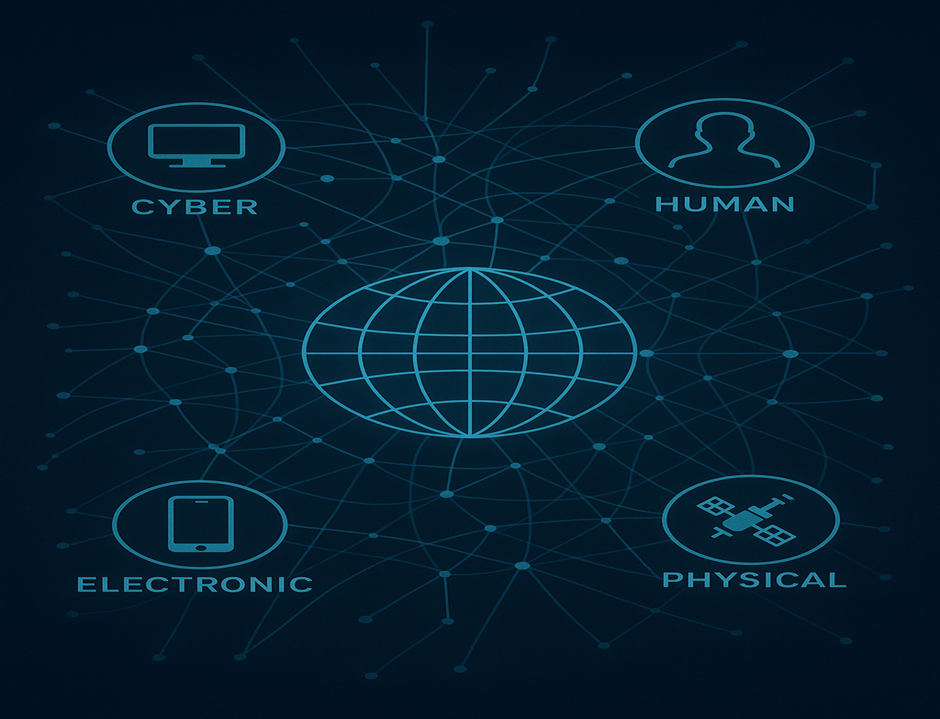
Figure 1 summarizes the main doctrinal components involved in the conduct of IO, highlighting the specialized capabilities aimed to impact the information environment and supporting the decision-making process in the military sphere.
Figure 1. Doctrinal Capabilities that Make Up IO
Source: Author’s own work.
IO integrates various disciplines, notably PSYOPS, EW, OPSEC, MILDEC, and CNO. These capabilities contribute to a coordinated effort aimed at managing information flows, shaping strategic narratives, and exploiting vulnerabilities in the cognitive and technological domains. Consequently, IO represents an essential component of contemporary warfare, where the battlefield transcends physical space and extends into the informational and perceptual domains.
To understand this doctrinal framework, it is necessary to consider the OE and the IE. The OE encompasses the set of conditions, circumstances, and influences that affect the employment of military capabilities and condition the commander’s decision-making process, in accordance with ME 1-134.[2] This environment encompasses the land, maritime, air, space, and information domains, as well as adversary, ally, and neutral systems—political, military, economic, psychosocial, informational, and legal infrastructure—relevant to the conduct of a military operation.
The IE, for its part, encompasses the individuals, organizations, and systems that collect, process, disseminate, or use data in the conduct of operational activities. Although both concepts are defined independently, they maintain a relationship of functional interdependence that directly influences the conduct of military operations. It should be noted that the OE exhibits various characteristics that affect the actions of the forces and possess a significant informational dimension. Among the main ones are:
a) the speed and dissemination of information flows;
b) asymmetry in data access and control;
c) expansion of cyberspace and space capabilities;
d) operations conducted among populations.
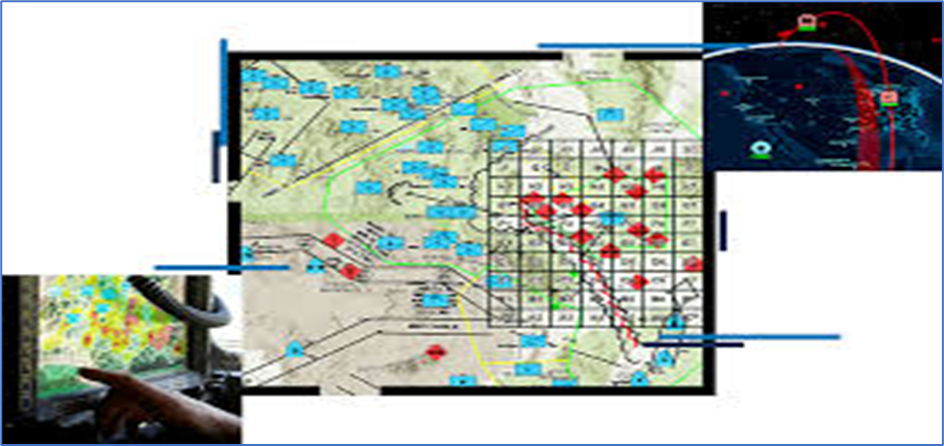
Figure 2 illustrates the relationship between IO and the multidomain environment of contemporary conflicts, highlighting the interaction between the various operational domains and the information space.
Figure 2. Interrelationship between IO and the multidomain environment
Source: Author’s own work.
In the 21st century, the battlefield transcends the traditional physical domain. As General Michael V. Hayden noted: “In the information age, perception trumps reality; controlling the narrative is as critical as dominating the terrain.” In this VUCA (Volatility, Uncertainty, Complexity, Ambiguity) environment, IO emerges as a space for strategic confrontation, especially for the Special Forces, where the contest unfolds primarily in the cognitive realm.
The EP’s IO Manual defines IO as “the integrated use of information-related capabilities (ICR,[3] ) alongside other lines of operation to alter, degrade, disrupt, or usurp adversary decision-making, while simultaneously protecting one’s own decision-making capability.” This approach encompasses the set of activities aimed to influence the IE, structured into three interrelated dimensions—physical, informational, and cognitive—which are described below.
1. Physical Dimension: This encompasses the connectivity infrastructure—data transmission, reception, and storage—as well as tangible actions that convey messages in and of themselves, such as patrols, aerial reconnaissance, and civil affairs projects.
2. Informational dimension: This encompasses the content and flow of data—texts, images, and digital records—that military staffs collect, process, store, distribute, and present to support the decision-making process. This dimension constitutes the essential link between the physical components and the cognitive realm.
3. Cognitive Dimension: This encompasses the perceptions and mental processes of the actors involved—commanders and allied leaders, external audiences, adversaries, and hostile decision-makers—who interpret information and guide their behavior based on it. Social, cultural, historical, and religious factors influence these interpretations, and this is the space where the perceptions and behaviors of target audiences are shaped.
The Land Operations Planning Manual (POT) recognizes that all forces deployed in a theater of operations possess the capabilities to execute IO. However, the unit’s best suited for these activities are those specialized in information management, combat support elements ([4] ), and the Special Forces. The latter consists of highly trained military units that carry out unconventional, high-risk, and often covert missions. Their deployment is aimed at achieving strategic objectives beyond the capabilities of conventional forces, through specialized tactics and high operational flexibility.
Key Characteristics of Special Forces
- Rigorous selection and training: Their members are selected through highly demanding selection and complete intensive training that includes advanced combat, survival, languages, tactical medicine, demolition, and intelligence.
- Specialized capabilities: They are equipped and trained to operate in hostile and diverse environments, often with limited resources and without immediate conventional support.
- Operational versatility: They carry out multiple missions that demand adaptability, initiative, and critical thinking to address complex and changing situations.
Main missions of the Special Forces[5]
- SR (Special Reconnaissance): Covertly gathering in-depth critical intelligence on the adversary’s movements, terrain characteristics, and activities.
- DA (Direct Action): Small-scale offensive operations, such as raids, ambushes, hostage rescue, or neutralization of high-value targets.
- FID (Foreign Internal Defense): Training, advising, and supporting allied forces to strengthen their capabilities against internal threats.
- UW (Unconventional Warfare): Supporting or leading resistance movements or insurgencies against established powers.
- CT (Counterterrorism): Prevention, deterrence, and response to terrorist acts.
- PR (Personnel Recovery): Recovery of military or civilian personnel who are isolated, captured, or detained in hostile environments.
- Security Assistance: Training, advising, and providing equipment to foreign forces to strengthen regional stability.
The Special Forces employ cutting-edge weaponry and technology—specialized weapons, adapted vehicles, unmanned aerial systems, and secure satellite communications—designed to carry out highly complex missions. These capabilities position them as a strategic asset capable of projecting power discreetly, responding rapidly to crisis situations, and achieving objectives where conventional forces face operational limitations.
Within the framework of IO, the Special Forces operate in the information domain to disrupt the adversary while simultaneously protecting their own decision-making processes. To this end, they combine tactical capabilities with strategic effects in the physical, digital, and cognitive domains.
Among the main activities related to IO, the following stand out:
1. Support for covert and direct-action operations. IO enables the development of narratives, the creation of confusion among the adversary, or the concealment of one’s own forces’ actual movements. For example, prior to an incursion, deceptive messages may be disseminated to distract the opponent or disrupt their OODA loop (Observation, Orientation, Decision, and Action).
2. PSYOPS. These actions are designed to influence the adversary’s morale, weaken the cohesion of their forces, or win the support of the local population. The means employed include the distribution of leaflets, social media campaigns, and radio broadcasts targeting specific audiences.
3. MILDEC. These capabilities allow for the dissemination of false or distorted information with the aim of inducing strategic errors in the adversary, such as shifting forces to irrelevant areas or misinterpreting operational intentions.
4. Cyber Operations and EW. These include attacks on computer networks, interference with communication systems, or manipulation of command-and-control platforms. These actions allow for the degradation or neutralization of the adversary’s capabilities without necessarily resorting to the direct use of force.
5. OPSEC. This component applies strict operational security procedures designed to protect plans, movements, and critical capabilities, preventing leaks that could compromise the mission’s success.
6. Strategic influence in pre-conflict phases. IO is also employed during stages of deterrence or strategic competition, prior to the onset of open conflict, with the aim of shaping perceptions, influencing the adversary’s will, and reducing the likelihood of escalation.
One of the central purposes of IO is to affect the adversary’s ability to interpret and make sense of events unfolding in the operational environment. Influencing their perception of certain events can degrade, disrupt, or even indirectly disable their ability to conduct operations. Concurrently, IO seeks to preserve the ability of allied commanders to lead their forces and to understand, visualize, describe, and conduct operations (EP 2023, chap. 1).
The Special Forces participate in IW both at the cognitive level—by influencing perceptions and decisions through strategic messages—and in the physical and digital domains, through the acquisition of critical information, the denial of capabilities to the adversary, and the generation of effects with psychological and political repercussions. Their high level of readiness, adaptability, and operational discretion makes them a particularly relevant strategic instrument for the execution of IO, especially in scenarios characterized by the ambiguity and dynamics inherent to hybrid warfare.
Likewise, these units employ social media, which constitute a dominant component of information operations and operate across multiple dimensions. The messages, images, graphics, and audiovisual content disseminated through these platforms influence the perceptions and behaviors of diverse audiences in near real time, generating significant effects on both public opinion and the conduct of operations.
Information Warfare (IW) and SOF
IW refers to the use of the informational environment and information and communication technologies for the purpose of gaining a strategic advantage over an adversary. In this context, the management of the information space plays a central role for SOF, as it allows for influencing the opponent’s decision-making processes to the point of inducing them to make decisions contrary to their own interests and favorable to the actor conducting the operation (Lewis n.d.). This form of confrontation takes place in the informational domain and seeks to achieve superiority over the adversary through the manipulation, control, or disruption of data and communications flows, among whose main characteristics are the following:
- altering the adversary’s information in order to influence their decision-making processes without their awareness;
- the dissemination of propaganda or disinformation aimed at undermining enemy morale and shaping public perception;
- interference with media outlets, such as television, radio, or social media;
- cyberattacks against communication systems, critical infrastructure, or databases;
- digital espionage and the gathering of tactical and operational intelligence.
This type of confrontation can involve both state and non-state actors and manifest itself in the military, political, economic, and social spheres. In this scenario, the Special Forces play a significant role due to their flexible and specialized nature, as well as their ability to operate in sensitive environments or behind enemy lines. Their use in IW is primarily aimed at altering the perceptions, attitudes, and behaviors of key audiences—adversaries, local populations, and leaders—with the purpose of supporting military and strategic objectives. These actions are carried out mainly through military information support operations (MISO), among which the following stand out:
- Dissemination of messages. These operations employ various media—radio, printed material, social media, or direct contact—to convey narratives aimed at specific audiences. Among their main purposes are to create divisions between adversary leaders and their population, warn of the risks of supporting hostile forces, and promote cooperation with allied forces.
- Deterrence and uncertainty. The dissemination of information aimed at discouraging certain actions by adversary leaders and their support structures increases uncertainty and confusion in their decision-making processes, which may lead them to make erroneous decisions or abandon certain courses of action.
- Special reconnaissance and intelligence collection. The Special Forces can infiltrate deep into the operational area to conduct surveillance and reconnaissance on specific areas or targets. These activities enable the collection of critical, accurate, and timely intelligence on the adversary’s capabilities, intentions, and IE—information essential for planning and executing effective IO.
- Operational Security (OPSEC). These units apply rigorous OPSEC measures designed to conceal plans, movements, and capabilities in order to prevent the adversary from obtaining relevant information about friendly forces.
- Unconventional warfare and support for resistance. When operating alongside irregular forces or resistance movements, the Special Forces also participate in the informational dimension of the conflict. Their advisory role may include managing communication with the civilian population and disseminating messages aimed at eroding the adversary’s legitimacy and capacity for action on the informational and psychological levels.
- Direct action and physical effects with informational relevance. Direct action operations—such as precision strikes or sabotage against high-value targets—can generate significant effects on the adversary. By degrading command and control nodes or critical infrastructure, these actions disrupt the adversary’s decision-making process and affect their perception of the operational situation.
IW attacks are primarily directed against computer networks, electronic systems, and other infrastructure that enables data transmission and management. In this context, the most widely used term is cyberwarfare, considered a subset of IW, as it focuses specifically on the use of digital capabilities to degrade or neutralize the adversary’s computer systems.
Among the main types of attacks associated with IW, the following stand out:
- Virtual attacks, aimed at penetrating, altering, or degrading computer networks and communication systems.
- Physical destruction, aimed at neutralizing infrastructure that supports the adversary’s data flow and technological capabilities.
An example of the application of these practices can be seen in the counterinsurgency campaigns conducted in Afghanistan (2010–2021), whose objective was to strengthen local population support for the Afghan government and weaken the Taliban insurgent narrative. Key tactics employed included the distribution of informational leaflets and messages broadcast via radio and social media, engagement with community leaders to reinforce strategic narratives, and coordination with local media to communicate the coalition’s achievements. These operations were based on the principle of “be the first to tell the truth,” as noted by General Ralph O. Baker, with the aim of countering insurgent propaganda and reinforcing the legitimacy of government forces.
The Special Forces operate within the conceptual framework of the “trident of irregular warfare,” an analytical approach used in military and strategic studies to describe the three fundamental components that interact in unconventional or asymmetric conflicts. This model helps explain how an irregular force—such as guerrillas, insurgencies, or non-state armed movements—organizes and operates against a conventional adversary.
The concept of the “trident” is not attributed to a specific author or a particular doctrinal work; rather, it constitutes a conceptual adaptation inspired by the “strange trinity” formulated by the Prussian military theorist Carl von Clausewitz (1780–1831),[6] who explained the dynamics of war based on the interaction between political, social, and military factors.
Table 1 illustrates the conceptual relationship between the theoretical model formulated by Carl von Clausewitz and its reinterpretation in the analytical framework used to study irregular warfare within the context of IW.
Table 1
Structural Comparison Between the Clausewitzian Trinity and the Trident Model Applied to IW
| Element | Clausewitzian Trinity | Adaptation to the trident in IW |
|---|---|---|
| 1 | People: violence, hatred, and enmity | Government: political authority to be defended or overthrown |
| 2 | Armed Forces: chance and probability | Population: actor that grants legitimacy and support |
| 3 | Subordination of war to politics | Guerrillas or insurgents: irregular armed group |
Source: Author’s own work.
Table 2 describes the functions and operational characteristics of the three components that structure the trident model within the analysis of IW.
Table 2
Strategic roles and characteristics of the trident’s actors in the informational environment
| Tip of the trident | Primary function | Characteristics |
|---|---|---|
| Politics (Government) | Strategic direction and legitimization | Defines ideological objectives, seeks popular support, and establishes external ties |
| Military (Special Forces) | Conduct of armed operations | Carries out sabotage, targeted attacks, and trains resistance forces |
| Social (Population) | Logistical support and social base | Provides intelligence, shelter, and resources; disseminates propaganda |
Source: Prepared by the author.
Based on the foregoing, it can be noted that the concept of the “trident” or “trinity of irregular warfare”—referred to in some studies as the “trinity of counterinsurgency”—constitutes a contemporary reinterpretation of Clausewitz’s trinity, adapted to explain the dynamics inherent in asymmetric conflicts and guerrilla wars.
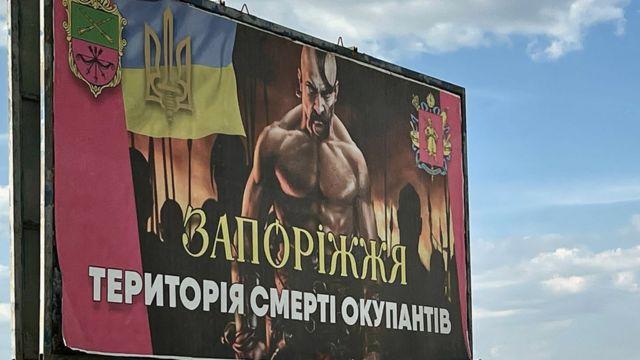
In this type of confrontation, one of the activities carried out by the Special Forces consists of training, organizing, and structuring resistance forces, as well as disseminating narratives aimed at strengthening the internal cohesion and legitimacy of these movements. A recent example can be seen in the actions carried out by Ukrainian Spetsnaz[7] units against Russian forces, where support for resistance structures has played a significant role in mobilizing the population and constructing messages associated with national defense.
Figure 3 illustrates an example of visual messages used by the Ukrainian resistance in public spaces, which seek to bolster collective morale and express rejection of the presence of invading forces.
Figure 3. Resistance messages on a road in Zaporizhzhia (Ukraine)
Source: BBC News, photograph by Sara Rainsford.
Historical Examples
Various recent conflicts demonstrate the use of IW as a tool to contest control of the information environment and shape the conduct of military and political operations.
1. Iraq: War of Narratives (2003–2010)
During the international coalition’s intervention in Iraq, an intense narrative competition unfolded aimed at countering insurgent propaganda and reinforcing the legitimacy of the international presence. Key actions included managing local media, utilizing emerging digital platforms, and launching campaigns to discredit insurgent leaders. Additionally, messages highlighting progress in security and reconstruction were disseminated to bolster perceptions of stability.
2. Covert Operations in Africa and the Middle East
USSOCOM SOF carried out missions focused on gathering HUMINT and managing the information environment. These actions sought to identify terrorist networks, establish ties with local actors, and create favorable conditions for cooperation with tribal and religious leaders.
3. Syria and Iraq: The Fight Against ISIS (2014–2020)
U.S. and allied SOF conducted information operations aimed at countering ISIS’s digital propaganda. These actions included disseminating alternative narratives, publicly exposing the group’s ideological contradictions, and providing communications support to local militias to bolster their legitimacy among the population.
4. Russia–Ukraine: Use of Disinformation and Deception
In the conflict between Russia and Ukraine, Russian special forces—popularly known as the “little green men”—carried out information campaigns designed to create confusion about the situation in Crimea. These operations exploited ethnic and linguistic tensions in pro-Russian regions, creating an environment of strategic ambiguity and disinformation regarding unfolding events.
5. Protests and Social Unrest in Latin America
Social mobilizations in various Latin American countries demonstrate how digital networks and media narratives have become key tools for organizing mass protests and amplifying political messages, highlighting the cross-cutting role of IO in AI during internal crises.
5.1 Chile (2019)
The demonstrations that began following the increase in public transportation fares led to mass protests and episodes of violence that included damage to subway stations, attacks on public infrastructure, and clashes with security forces. Social media played a central role in the organization and dissemination of messages associated with these mobilizations.
5.2 Colombia (2021)
The protests linked to the National Strike initially emerged in response to a government tax reform proposal. They subsequently incorporated broader social and economic demands. Social mobilization was largely coordinated through digital platforms, which allowed for the amplification of political messages and the coordination of protest actions across different regions of the country.
5.3 Ecuador (2019)
The elimination of fuel subsidies sparked protests led primarily by indigenous organizations, labor unions, and student movements. The mobilizations included roadblocks and clashes with security forces, while social media was used to disseminate messages, organize rallies, and reinforce narratives associated with the social movement.
5.4 Peru (2022–2023)
Following the removal from office of President Pedro Castillo Terrones, protests broke out in various regions of the country, including roadblocks, mass marches, and clashes with law enforcement. In this context, digital platforms and media outlets amplified political narratives and calls for demonstrations.
In several of these cases, the information environment served as a space for narrative contestation, enabling the articulation of political discourses, the mobilization of social actors, and the amplification of messages directed at national and international audiences.
The Special Forces operate in accordance with the conceptual framework defined by the highest levels of strategic leadership in each country. Their deployment is aimed at supporting the development of Operational Task Units (OTUs) and strengthening institutional capabilities in the face of threats arising in environments characterized by VUCA. In situations of systemic instability, various actors may attempt to undermine governance and the fundamental rights of the population, highlighting the relevance of these units’ specialized capabilities. Far from replacing conventional territorial forces, they complement their actions when the situation demands it, focusing their participation on special operations and avoiding deployment in roles typical of police control or conventional territorial defense.[8]
In the contemporary strategic environment, these units perform functions of particular importance, including:[9]
- integrating into campaign strategies aimed at projecting influence, acting as versatile instruments for managing the information environment;
- contributing to integrated deterrence by generating strategic effects that transcend the strictly military sphere;
- serving as strategic multipliers by executing special warfare functions that provide the joint force with geostrategic and informational advantages over competitors and adversaries.
Conclusions
IO has established itself as an essential component in the conduct of military operations in contemporary conflicts. In a strategic environment characterized by the growing relevance of IE and by the interaction between the physical, digital, and cognitive domains, the contest for control of information and perceptions acquires a strategic value comparable to that of control over physical space.
In this scenario, the Special Forces play a particularly significant role due to their ability to operate in complex, ambiguous, and highly politically sensitive environments. Their specialized training, operational flexibility, and ability to conduct covert or precision operations make them ideal instruments for influencing the IE, degrading the adversary’s decision-making capability, and simultaneously protecting their own decision-making processes.
Doctrinal analysis shows that the integration of capabilities such as PSYOPS, MILDEC, OPSEC, EW, and CNO, together with the use of MISO, enables the generation of strategic effects that transcend the strictly military realm. These capabilities act upon the physical, informational, and cognitive dimensions of the battlefield, making it possible to alter perceptions, influence behavior, and shape the course of operations.
The cases examined demonstrate that competition in the informational domain constitutes a determining factor in contemporary conflicts. Narrative management, the manipulation of information flows, and the strategic use of digital platforms have demonstrated their ability to influence public opinion, mobilize social actors, and affect the conduct of military and political operations.
Consequently, the effective use of IO requires its full integration into strategic planning and the design of multi-domain campaigns. The Special Forces, far from replacing conventional forces, complement their capabilities by acting as strategic multipliers capable of projecting influence, supporting integrated deterrence, and generating informational advantages over competitors and adversaries.
Finally, in an environment characterized by VUCA, the ability to understand, manage, and dominate the information space becomes a decisive factor for security and defense. Within this framework, the Special Forces are established as a fundamental strategic instrument for the execution of IO and for the protection of national interests in 21st-century conflicts.
Endnotes
- Joseph S. Nye Jr., Soft Power: The Means to Success in World Politics (New York: PublicAffairs, 2004).
- Robert B. Cialdini, Influence: Science and Practice, 5th ed. (Boston: Pearson, 2014).
- Pedro Baños, Mental Domination: The Geopolitics of the Mind (Barcelona: Ariel, 2020).
- North Atlantic Treaty Organization, “Cognitive Warfare: Strengthening and Defending the Mind,” NATO Allied Command Transformation, April 5, 2023, https://www.act.nato.int/article/cognitive-warfare-strengthening-and-defending-the-mind/.
- Martin C. Libicki, “The Convergence of Information Warfare,” Strategic Studies Quarterly 11, no. 1 (2017): 49–65.
- Andrew Mackay, Steve Tatham, and Lee Rowland, Behavioural Conflict: Why Understanding People and Their Motivations Will Prove Decisive in Future Conflict (Shrivenham: Military Studies Press, 2011).
- Dmitry Adamsky, “From Moscow with Coercion: Russian Deterrence Theory and Strategic Culture,” Journal of Strategic Studies 41, nos. 1–2 (2018): 33–60.
- Mark Galeotti, “Hybrid, Ambiguous, and Non-Linear? How New Is Russia’s ‘New Way of War’?”, Small Wars & Insurgencies 27, no. 2 (2016): 282–301.
- Mark Galeotti, Russian Political War: Moving Beyond the Hybrid (London: Routledge, 2019).
- Valery Gerasimov, “The Value of Science Is in the Foresight: New Challenges Demand Rethinking the Forms and Methods of Carrying Out Combat Operations,” Military Review 96, no. 1 (2016): 23–29.
- Michael Kofman, Katya Migacheva, Brian Nichiporuk, Andrew Radin, Olesya Tkacheva, and Jenny Oberholtzer, Lessons from Russia’s Operations in Crimea and Eastern Ukraine (Santa Monica, CA: RAND Corporation, 2017).
- P. W. Singer and Emerson T. Brooking, LikeWar: The Weaponization of Social Media (Boston: Houghton Mifflin Harcourt, 2018).
- Joint Special Operations University, The Fourth Age of SOF: The Use and Utility of Special Operations Forces in a New Age (Tampa, FL: JSOU Press, 2022).
- Colombian National Army, MFRE 3-05 Special Operations (Bogotá: Army Doctrine Center, 2017).
- Peruvian Army, MF – 34 Special Operations.
- Joint Command of the Peruvian Armed Forces, C – 1 Information Operations (Lima: CCFFAA, 2023).
- Peruvian Army, Information Operations (Lima: Peruvian Army, 2023), chap. 1, “General Overview,” section II, “Definitions.” ↑
- Peruvian Army, ME 1-134 Land Operations Planning (Lima: Peruvian Army, 2015). This manual defines the area of operations, establishes planning methodologies, and provides guidance on conduct under a mission-oriented command approach. ↑
- Peruvian Army, Information Operations Manual (Lima: Peruvian Army, 2023), chap. 1, “Operational Environment.” ↑
- Combat Camera: an element trained and qualified in information operations that is part of a patrol or similar organization and can record, via image or video, engagements with a specific target for historical purposes, for the development of civil affairs products or psychological operations; it can also be used to counter the threat’s propaganda. ↑
- Peruvian Army, Special Operations, 2024, chap. 1, “Fundamental Considerations.” ↑
- Carl von Clausewitz, On War, ed. and trans. Michael Howard and Peter Paret (Princeton, NJ: Princeton University Press, 1976), 89. ↑
- Spetsnaz: abbreviation of the Russian expression Spetsiálnogo Naznachéniya, meaning “special purpose.” ↑
- Colombian National Army, MFRE 3-05 Special Operations. ↑
- Joint Special Operations University (JSOU), The Fourth Age of SOF: The Use and Utility of Special Operations Forces in a New Age (Tampa, FL: JSOU Press, 2022). ↑