
Abstract
In the 21st century, armored vehicle-based land capabilities have undergone a radical transformation. The emergence of armed drones, loitering munitions, and artificial intelligence (AI) has proven highly effective in recent conflicts, affecting the traditional supremacy of tanks on the ground. This analysis addresses the evolution and adaptation of these systems in the face of the impact of unmanned technologies and new tools in scenarios such as Nagorno-Karabakh (2020) and Ukraine (2022-2025). It evaluates the tactical limitations imposed by these devices, as well as the doctrinal and technical responses applied, in addition to the development of state-of-the-art protected platforms. The results show that, despite their vulnerability, tanks continue to be key elements for deterrence and territorial control. However, they need to be transformed into hybrid platforms, integrating drones, AI, and electronic warfare.
Keywords: armored vehicles, drones, land warfare, technological disruption, multidomain warfare, AI, armed vehicles, military tactics, national security
Introduction
For more than a century, armored vehicles have been emblematic of ground force, tactical mobility, and deterrent power. However, recent technological advances, particularly in armed drones and autonomous systems, pose an unprecedented challenge to their operational relevance. In current conflicts, much cheaper and more mobile platforms have managed to neutralize armored columns without facing direct resistance, evidencing a fundamental strategic transformation on the battlefield.
The main objective of this study is to analyze the prevalence, evolution, and adaptation of armored vehicles in the face of the impact of drones and new technologies in 21st-century conflicts. To this end, a comparison is made between scenarios such as Nagorno-Karabakh (2020) and Ukraine (2022–2025) in order to answer how drones have limited armored maneuvering, how the use of tanks has evolved in these scenarios, and what doctrinal and technological perspectives will shape their future in multidomain warfare.
It also seeks to describe the results of this transformation, discussing its doctrinal impact and influence on the role of tanks, which not only face symmetric threats but also operate in a new dimension of combat where satellite visibility, artificial intelligence (AI), and swarms of autonomous drones redefine the rules of ground combat.
The growing evidence of the vulnerability of armored vehicles raises a central question for military strategists and planners: how can armored vehicles be made viable in the land combat scenario, or, alternatively, should their role be rethought in light of the emerging threats of the 21st century?
Based on a qualitative method, this paper analyzes real cases, reviews relevant military theories, and proposes prospective scenarios to understand the future development of land power in a multidomain warfare context.
1. Theoretical and Conceptual Framework
1.1. Revolution in Military Affairs (RMA) Theory
The Revolution in Military Affairs (RMA) is a theory that posits that radical technological changes can transform the nature of warfare, generating doctrinal, organizational, and strategic discontinuities (Fissel 2022). It is not just about the development of new weapons, but about a new combat paradigm in which technology redefines how, when, and why we fight. According to Krepinevich (1992), disruptive technological changes can radically alter the nature of warfare, generating new doctrines, tactics, and organizational structures. FPV drones, kamikaze drones, and drone swarms represent an RMA, as they change the logic of ground combat, render obsolete systems designed for symmetric warfare such as tanks, and require multi-domain warfare doctrines.
1.2. Theory of Military Technological Disruption
This theory offers a forward-looking perspective on modern warfare, where certain emerging technologies not only transform weapons but also rewrite doctrines, organizational structures, and the logic of victory. Inspired by Clayton Christensen’s concept of disruptive innovation, it understands that a technology or combination of technologies can radically alter the balance between pre-existing actors and doctrines (Christensen 1997, 11–12).1
Adopted by defense since the Atlantic Council’s Disrupt or Be Disrupted report (Hasik and Callan 2014), it includes the categorization of four types of strategic disruptions, from “silver bullet” weapons to technological accumulation that produces systemic changes and demands agile doctrines (Wirtz 2023). According to Csernatoni and Martins (2024), three dimensions are essential for the effectiveness of disruption in defense: temporality (the moment of appearance that distinguishes useful innovation from strategic surprise), performativity (political and media narratives that increase pressure for adoption or fear), and imagination (the ability of technology to generate new ways of thinking about war and its risks).
Technologies with economic and tactical advantages can replace dominant doctrines (Horowitz 2010). Land doctrine faces multi-domain threats, where drones evolve from simple surveillance platforms to surgical systems, neutralizing the armored advantage with a highly favorable cost-benefit ratio. New technologies can displace dominant doctrines or systems if they offer economic and tactical advantages (Horowitz 2010). Modern strategy requires constant reinterpretation, as land doctrine is threatened by multidomain warfare. Drones have evolved from surveillance platforms to surgical strike systems, whose low cost, flexibility, and range have broken the rules of combat, neutralizing the armored advantage with an overwhelming cost-benefit ratio in favor of those who employ these tools.
1.3. Theory of Asymmetric Tactical Warfare
Tactical asymmetric warfare aims to destabilize the adversary from within, using mobility, intelligence, economic technologies, and selective high-impact actions. Arreguín-Toft (2005) argues that actors with lesser capabilities achieve success by employing tactics that are opposite to those of their more powerful adversaries. Creveld (1991) points out that this asymmetry destabilizes traditional wars, since military supremacy no longer guarantees political victory.
In the 21st century, this theory has been enriched by emerging technologies such as drones, AI, and cyber intelligence, shifting the classic view of military power toward a paradigm of adaptive innovation. Actors with lesser capabilities resort to unconventional methods, including technology and guerrilla warfare, to neutralize superior conventionally equipped forces (Hammes 2006). In current conflict scenarios, the use of drones allows militias, insurgents, or small states to overcome tanks and armored vehicles without resorting to air power or other traditional resources, thus reducing the superiority of conventional ground power.
1.4. Multidomain Warfare Theory
Modern warfare requires the synchronization of land, air, sea, space, and cyber operations to achieve decisive superiority (TRADOC 2018). Multi-domain warfare (MDO) represents an evolution in military thinking that argues that future conflicts will not be resolved exclusively on land, sea, or air (Townsend 2018), but must be conducted in a coordinated manner across all domains of combat. This perspective arises in response to the failure of traditional models in the face of asymmetric actors and disruptive technologies (Manolache 2023).
Formalized by the U.S. Army Training and Doctrine Command (TRADOC), the official doctrine states that “the core of modern operations lies in the rapid and continuous integration of all domains of warfare across time, space, and the ability to overcome the adversary, supported by distributed command and disciplined initiative at all levels” (TRADOC, Multi-Domain Operations 2028). Influenced by experiences in Iraq, Afghanistan, Syria, Nagorno-Karabakh, and Ukraine, it is based on essential principles: real-time integration of all domains; tactical, operational, and strategic synchronization; anticipation and disruption of the enemy’s OODA (Observe–Orient–Decide–Act) cycles, as well as the establishment of distributed and resilient command and control networks that ensure decisive superiority in highly competitive scenarios. This concept is revolutionary, as it goes beyond classic approaches, such as Clausewitz’s pitched battle or Giuli’s aerial revolution.2
In the context of MDOs, a tank can be neutralized by a drone receiving orders from the other side of the continent via satellite, while an anti-aircraft battery can be disabled by a cyberattack prior to its activation. In current conflicts, such as the war between Russia and Ukraine, the lack of connection between armored vehicles and real-time intelligence, air defense, and electronic warfare systems leads to considerable vulnerability.
1.5. Theory of the Transparent Battlefield
Kilcullen (2020) argues that the 21st-century battlefield has lost the tactical opacity that historically allowed armies to move, hide, and surprise. With the proliferation of sensors, drones, satellites, artificial intelligence (AI), and social media, everything and everyone is visible, trackable, and geolocatable in near real time. This transparency coincides with the assertion by Watling et al. (2022, 6): “the proliferation of sensors, satellites, and drones turns the battlefield into a space where everything is observable and traceable,” which radically changes the way war is planned and executed.3 Armored vehicles, due to their size and thermal emissions, are easily detectable; tactical surprise disappears and passive defense is ineffective.
2. Doctrine of Land Power
The doctrine of land power, based on the mobility, protection, and firepower of armored vehicles, has its origins in World War I. These vehicles were designed to break through enemy lines, provide protection for infantry, and dominate the terrain. Today, models such as the M1 Abrams, T-90, and Leopard 2 symbolize land supremacy. Rapid maneuver doctrines, such as Blitzkrieg, consolidated their role until the end of the 20th century. However, an article in Business Insider (2025) reports that the U.S. Army plans improvements to the Abrams that include reactive armor, anti-drone sensors, and top-down protection panels to counter airborne attacks and modern electronic warfare. According to the aforementioned media outlet, these modifications seek to increase the resilience of M1 tanks based on lessons learned in Ukraine.4
3. Future of Ground Combat
The decisive impact of low-cost drones in the destruction of tanks and armored vehicles during the conflict between Russia and Ukraine is undeniable. Their influence on military tactics and strategies has raised questions about the advisability of the Armed Forces (FF. AA.) continuing to invest in the main combat vehicle, such as the tank. The FF. AA. are adopting new futuristic options, such as robotic armored vehicles, drone swarms, and defensive AI, in a total reinvention of ground combat. In fact, the use of AI drones in military operations is being studied, with an emphasis on coordinated attacks and precision targeting of armored targets (MIGS 2025).
4. Methodology
This study was designed as basic research, with the aim of generating theoretical knowledge about the doctrinal transformation in the use of drones in 21st-century conflicts.5 A qualitative approach was adopted, as it explores meanings, human experiences, and complex contexts through descriptive rather than numerical language.6 A design was used that contemplates a comparative multiple case study,7 selecting armed conflicts that occurred in the 21st century where the use of drones has had a verifiable tactical and strategic impact. The cases of Nagorno-Karabakh (2020) and Ukraine (2022–2025) were analyzed, allowing for the identification of patterns of armored vulnerability, tactical evolution, and doctrinal adaptation. The main technique was documentary analysis, complemented by qualitative content analysis; the triangulation of sources and methods strengthened the validity of the results. In addition, a systematic review of specialized sources was conducted, including SCOPUS, RAND, IISS, SIPRI, Oryx, RUSI, and Military Strategy Magazine. The review covers the period from 2014 to July 2025. The analysis is based on unclassified open sources and reports in the public domain; therefore, classified information and confidential doctrines were not considered. Validity is based on the triangulation of sources and the comparative cross-referencing of empirical evidence and strategic theory.
5. Results
5.1. Impact of Armed and Kamikaze Drones
The use of Bayraktar TB2 drones in Nagorno-Karabakh was decisive in neutralizing heavy military equipment, such as tanks and air defense systems. These unmanned aerial vehicles use precision-guided munitions for surgical strikes, minimizing collateral damage and demonstrating the transformation that these technologies are bringing to the nature of ground combat.
The conflict between Russia and Ukraine has become the main laboratory demonstrating the vulnerability of armored vehicles. Drones have revolutionized modern warfare, accounting for between 60% and 70% of losses in armored vehicles and defense systems in Ukraine, according to the French Institute of International Relations (IFRI 2025). In addition, some Ukrainian units use drones that deploy thermite at 3,000 °F on previously damaged tanks to ensure they are not recoverable.8
Figure 1 illustrates the operation of drones by Ukrainian soldiers in the Kharkiv region, demonstrating the active use of these platforms in contemporary combat scenarios. This image reinforces the strategic importance of unmanned aerial vehicles as disruptive elements in the current conflict, reflecting the technological transformation on the battlefield.
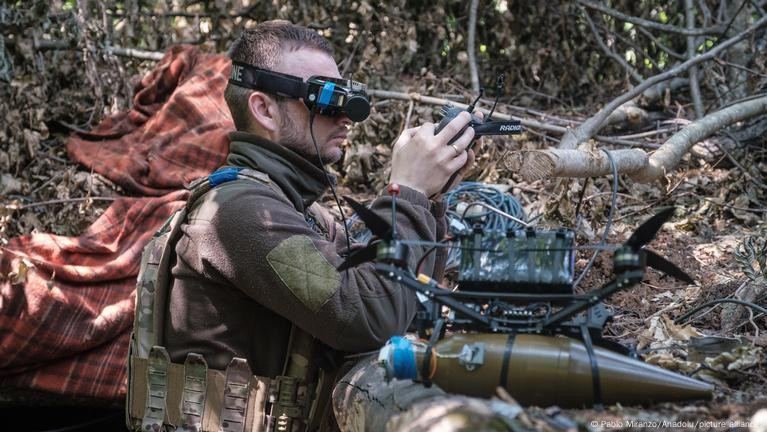
Figure 1. Ukrainian soldiers in the Kharkiv region operating a drone
Source: DW, “Drone attacks mark the day between Russia and Ukraine,” July 2024. https://www.dw.com/es/ataques-con-drones-marcan-%C3%BAltima-jornada-b%C3%A9lica-entre-rusia-y-ucrania/a-69698587
Table 1 presents a timeline highlighting key events in the rise of drones and their impact on ground combat capabilities, demonstrating a significant transformation in firepower and military strategy from 2000 to 2024.
Table 1. Key timeline: armored vehicles vs. drones (2000–2024)
| Year | Event | Relevance |
| 2003 | Invasion of Iraq (US) | Last classic war with armored dominance |
| 2010 | Expansion of Reaper drones | Consolidation of UAVs in NATO doctrine |
| 2020 | Nagorno-Karabakh War | Turkish drones destroy Armenian armored columns |
| 2022 | Russian invasion of Ukraine | Russian tanks vs. Ukrainian drones and guided artillery |
| 2023 | Massive use of FPV drones | Destruction of more than 3,000 armored vehicles documented |
| 2024 | Integration of AI and swarms | First battle with semi-autonomous swarms against Russian armored vehicles |
| April 2025 | In Andriivka, Ukraine destroys a Russian column of 12 armored vehicles using drones and artillery | Tanks cannot be the spearhead or vanguard; there is fear of aerial ambushes by drones. |
| March 2025 | India tests an FPV kamikaze drone with anti-tank ammunition, made by an internal brigade | Drones no longer just monitor, they also destroy armored vehicles within visual range |
| July 2025 | The head of the Ukrainian Armed Forces, General Syrskyi, reports that the Unmanned Systems Force destroyed 88 tanks and 129 armored vehicles in June 2025 | A single drone unit destroys the equivalent of an armored division |
Note. UAVs stands for unmanned aerial vehicles; NATO, North Atlantic Treaty Organization; FPV, first-person view; AI, artificial intelligence.
5.2. Doctrinal Limitations of Armored Vehicles in Multidomain Warfare
Academic analysis shows how armed drones, especially the Bayraktar TB2 in Nagorno-Karabakh, have demonstrated their lethality and cost-effectiveness in combat between drones and tanks. The lack of adequate sensors, insufficient electronic warfare coverage, and the lack of effective anti-aircraft systems put conventional ground units at risk (Kaiser Onetto 2021, 103-104). Military armored doctrines, developed during the Cold War with a classic land-based approach and conventional air support, have not adapted to the pace imposed by new threats, such as the massive use of drones and electromagnetic dominance (Kunertová 2025, 5).9 This situation reflects a disconnect between MDO and current tactical practice, as armored units continue to apply linear tactics focused on frontal defense.
5.3. New Technologies and Military Disruption
The results indicated that drones offer lower costs, greater precision, and accelerated update speeds compared to tanks. Heavy armored vehicles, in contrast, are expensive, slow, and vulnerable. A concrete example is the conflict in Ukraine, where FPV drones valued at US$500 have destroyed Russian tanks costing approximately US$3 million. This situation is consistent with the assertion that “commercial drones can also provide important military and intelligence capabilities at a lower cost; integrating armed commercial drones into the battlefield context poses challenges, but their usefulness is expected to increase in future conflicts” (Chaari 2024, 292).
Likewise, Kilcullen (2020) warns that we have entered an era of transparent battlefields, in which advantage is no longer determined by superior armor or firepower, but by the ability to detect first, understand sooner, and strike with precision. In this scenario, constant visibility—whether through ISR sensors, tactical drones, open intelligence, or social media—makes tanks and armored columns exposed, easily identifiable, and vulnerable targets. This tactical-operational hyper-transparency dismantles the traditional principle of concealed maneuver, which was at the core of land power throughout the 20th century. Opacity has disappeared; in its place is the need for active invisibility, tactical agility, swarm warfare, and constant adaptation. If armored vehicles cannot operate undetected, their survival will depend less on their armor and more on their integration into adaptive, collaborative, and multi-domain networks.
5.4. Countermeasures against Drones
The widespread adoption of small, agile FPV drones equipped with explosives has created a critical vulnerability in armored vehicles due to vertically falling munitions capable of penetrating their weakest points.10 In response, steel grids or nets were installed above the turrets, designed to cause the premature detonation of such munitions. These metal grids, known as “mangals” or anti-drone mesh, surround turrets and launchers to neutralize FPV munitions before impact.11 Countries such as the United Kingdom, Japan, and Israel are conducting tests on Challenger 2 and Type 10 tanks, where the systems have proven effective; however, they present complications such as reduced visibility for the crew and an increased visual profile of the vehicle.
6. New Generation Armored Vehicles
The comparative analysis between Nagorno-Karabakh and Ukraine highlighted the limitations faced by armored vehicles against drones. Nevertheless, these vehicles remain relevant thanks to developments promoted by the military industry and strategic doctrines towards hybrid platforms capable of operating in multi-domain environments. Here are three illustrative examples:
6.1. K2PL (Poland-South Korea)
A modernized version of the K2 Black Panther tank adapted to Polish needs. It includes additional modular armor, active protection systems (APS), anti-drone sensors, and integration into C4ISR networks. In 2025, Poland signed a historic contract to produce 800 units on its territory, strengthening its defensive capabilities and industrial autonomy.12
6.2. KF-51 Panther (Germany)
A fourth-generation prototype developed by Rheinmetall, incorporating a 130 mm automated cannon, reactive armor, and active defense systems. It stands out for its integration of reconnaissance drones and its ability to launch loitering munitions, positioning itself as a versatile armored system in UAV-saturated environments.13
6.3. K3 (South Korea)
Sixth-generation projection with a hydrogen hybrid engine, unmanned turret, and AI-based fire control systems.14 It includes autonomous driving modes and the ability to operate deployable auxiliary drones for reconnaissance and tactical support, establishing itself as a key node in multi-domain networks.
Taken together, these innovations demonstrate that armored vehicles have evolved into smarter, more resilient, and more integrated platforms, strengthening their role as indispensable instruments of deterrence and territorial control in modern warfare.
7. Discussion
The results show a strategic shift: traditional land dominance based on heavy armored vehicles is no longer viable without air cover, electronic warfare, and remote support. In Nagorno-Karabakh, Bayraktar TB2 drones systematically destroyed Armenian armored columns, significantly reducing their offensive capabilities. In Ukraine, between 60% and 70% of Russian armored vehicle casualties were caused by FPV and kamikaze drones, prompting Russia to disperse its forces, reinforce anti-drone defenses, and keep advanced tanks in reserve. These findings show that drones increased the vulnerability of armored vehicles and imposed limitations on their deployment, forcing the development of new tactics.
At the same time, we are seeing the modernization of new-generation tanks such as the Polish K2PL, the German KF-51, and the South Korean K3, designed with anti-drone systems, smart armor, and integration into C4ISR networks. As Krepinevich (1992) suggests, the real military revolution occurs not with technological creation but with its strategic integration.
Competition today is defined not only by the number of tanks or fighter jets, but by their efficient integration. Smaller but connected armed forces are required, trained in hybrid scenarios and prepared to operate in cyber defense, AI, autonomous swarms, and psychological warfare on social media. For the armed forces in Latin America, this implies reforming armored and land doctrines and moving toward an interoperable, flexible, and cyber-resilient force.
Tanks are no longer invulnerable; they are now costly and visible targets in the face of accessible and accurate drones. This transformation represents a disruption comparable to that caused by artillery to medieval heavy cavalry.
There is an imperative for a forward-looking vision and rigorous institutional demands, requiring the reconceptualization of the tank from a shock weapon to a joint support force, investment in national UAS squadrons, digital C2 networks, and anti-drone protocols, and the adoption of doctrines based on the priority use of drones, dispersion as a last resort, and armored vehicles protected by layers of unmanned fire.
Currently, modern armored vehicles operate sensors geared toward classic air and missile threats, but lack effective coverage against small drones and FPV munitions that attack from unexpected angles.
According to Table 2, a profound doctrinal change is observed: armored units must transition from linear columns to dispersed, self-contained nodes, connected in a resilient network without critical points, in line with the principles of Network Centric Warfare, where each tank becomes a sensor, computer, and decision-maker, avoiding vulnerable formations.
This new paradigm includes a doctrine based on continuous detection, jamming, kinetic interceptors, and electromagnetic domes to anticipate air attacks. Systems with defensive capabilities that counter unmanned aerial threats or drones (C-UAS) incorporate 360° RF sensors, Doppler radars, acoustics, and vision (“soft-kill”) capable of neutralizing drones or missiles before impact.
In addition, the concept of smart armor is introduced, where tanks operate as swarm nodes coordinated with scout drones, decoys, and integrated FPV ammunition, forming a joint body-swarm action system.
This collaboration requires integration into C4ISR networks with AI at the edge of the battlefield. However, the recent development of fiber-optic-guided FPV drones represents a technological leap that could redefine asymmetric warfare, as they are not vulnerable to electronic countermeasures.
In short, strategic evolution seeks not only to armor the tank, but also to rethink its function as an individual weapon toward a resilient node, remote operator, and key component of an interconnected multidomain ecosystem.
Table 2: Necessary strategic transformations in armored units
| Area | Description |
| Doctrine of use | Incorporation of laser systems, kinetic interceptors, jamming, and electromagnetic domes for active defense |
| Anti-drone defense | Use of 360° sensors, AI for detection, and automated countermeasures against drones and missiles |
| Smart armor | Tanks must operate in coordination with friendly swarms, including scout drones and decoys |
| Collaboration with drones | Integration into C4ISR (Command, Control, Communications, Computing, and Intelligence) networks for joint operation |
| Interoperability | Massive and coordinated use of FPV drones in armored operations |
| Distributed crew | Use of unmanned or remote-controlled armored vehicles for high-risk operations and reduced personnel exposure |
The use of drones against armored vehicles in symmetric warfare is a growing reality and a resource that extends to multiple conflict scenarios. Between 2016 and 2018, the terrorist group Islamic State (ISIS) used modified commercial drones for improvised aerial attacks in urban areas of Iraq and Syria, mainly in Mosul and Raqqa. These devices, purchased on the civilian market, were adapted with grenades, improvised explosives, and surveillance systems, causing military and civilian casualties, as well as significant psychological consequences (Stanford University 2018).15
Similarly, the Azawad Liberation Front (FLA), operating in Mali, uses FDG 410 VTOL drones manufactured by the Chinese company Flydragon. On January 28, 2024, a drone loaded with explosives attacked the US military base Tower 22, located in the Rukban refugee camp in Jordan, killing three soldiers and injuring 47 others. This attack is attributed to Kata’ib Hezbollah or related militias using modified Iranian Shahed drones (Woody 2025).16
A recent case in South America involves the use of a modified drone by the National Liberation Army (ELN) to attack a military patrol in the Catatumbo region of Colombia. This attack resulted in the death of three soldiers and eight wounded, making it one of the deadliest drone attacks in the region (Emblin 2025).17
Figure 2 highlights an FPV drone assigned to the Azawad Liberation Front (FLA) in Mali, illustrating the concrete manifestation of this technological and strategic trend.
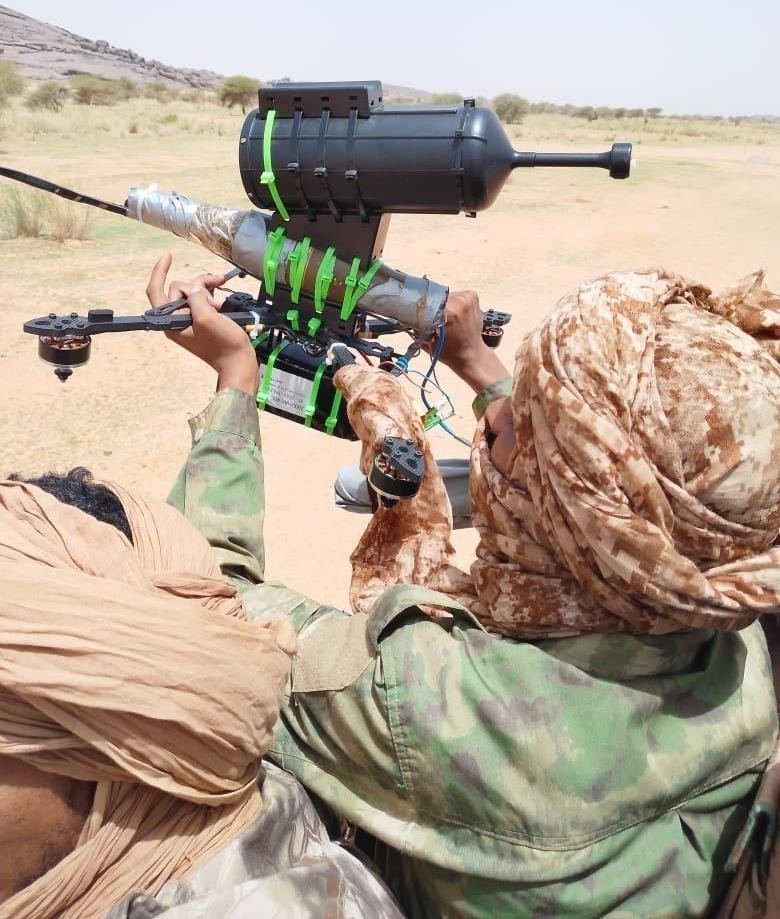
Figure 2. FPV drone used by the Azawad Liberation Front (FLA) in Mali.
Source: Digital image, August 2025. EOK Hub, LinkedIn. https://www.linkedin.com/posts/eokhub_mali-fpv-fla-activity-7355866764490022912-g2ai/.
Conclusions
- Drones radically transformed the 21st-century battlefield, limiting the use of armored vehicles in conventional operations; however, tanks remain indispensable as instruments of deterrence, penetration, and territorial control. Analysis of Nagorno-Karabakh and Ukraine confirmed that, although vulnerable, armored vehicles did not disappear, but rather evolved into a different role in the context of multidomain warfare.
- The emergence of new-generation armored vehicles (K2PL, KF-51, K3) reflects that the answer is not to abandon tanks, but to reinvent them as hybrid, agile platforms integrated with drones, artificial intelligence, and electronic warfare. This requires military planners to develop a new doctrine that contemplates the full integration of unmanned ground and air assets in modern warfare.
- Armed drones represent a high-value asymmetric tactical resource for state and non-state actors, including insurgent threats in Latin America. Documented cases involving the ELN in Colombia (2025) demonstrate that the use of drones carrying explosives by insurgent and terrorist groups is no longer theoretical but a global operational reality. This tactic is not only viable in open conflicts, but also in low-intensity scenarios such as those faced by Peru in the VRAEM due to its low cost, difficulty of detection, and high psychological and strategic impact. Ignoring this risk implies a critical gap in national defense. It is necessary to adopt anticipatory intelligence protocols, invest in a set of defensive capabilities to counter threats from unmanned aerial systems (UAS) or drones (C-UAS), and implement doctrinal reforms integrated into the national context.
Endnotes
- Ivan Arreguín-Toft, How the Weak Win Wars: A Theory of Asymmetric Conflict (Cambridge: Cambridge University Press, 2005).
- M. Z. Chaari, “A Growing Integration of Weaponized Commercial Drones in Battlefield Operations,” TechDefense 2024 Conference Proceedings (2024): 289–94, https://doi.org/10.1109/TechDefense63521.2024.10863087.
- Martin van Creveld, The Transformation of War (New York: Free Press, 1991).
- Raluca Csernatoni and Bruno Oliveira Martins, “Disruptive Technologies for Security and Defense: Temporality, Performativity, and Imagination,” Geopolitics 29, no. 3 (2024): 849–72, https://doi.org/10.1080/14650045.2023.2224235.
- M. C. Fissel, The Military Revolution and Revolutions in Military Affairs (Berlin: De Gruyter, 2022), https://doi.org/10.1515/9783110661415.
- Thomas X. Hammes, The Sling and the Stone: On War in the 21st Century (St. Paul, MN: Zenith Press, 2006).
- James Hasik and Byron Callan, Disrupt or Be Disrupted: How Governments Can Develop Decisive Military Technologies (Washington, DC: Atlantic Council, Brent Scowcroft Center on International Security, 2014), https://www.files.ethz.ch/isn/180293/Disrupt_or_Be_Disrupted.pdf.
- Michael C. Horowitz, The Diffusion of Military Power: Causes and Consequences for International Politics (Princeton: Princeton University Press, 2010).
- Institut Français des Relations Internationales (IFRI), “Design, Destroy, Dominate: Massive Drone Warfare as a Potential Military Revolution” (2025), http://www.ifri.org/en/papers/design-destroy-dominate-mass-drone-warfare-potential-military-revolution.
- David Kilcullen, The Dragons and the Snakes: How the Rest Learned to Fight the West (Oxford: Oxford University Press, 2020).
- Andrew F. Krepinevich, “The Military-Technical Revolution: A Preliminary Assessment” (Washington, DC: Center for Strategic and Budgetary Assessments, 1992).
- Ionela Cătălina Manolache, “The Role of Multi-Domain Operations in Modern Warfare,” RAFT: Defense, Administration & Technology Review (2023).
- Montreal Institute for Genocide and Human Rights Studies (MIGS), “AI, Drones, and the Future of Defense” (2025), https://migsinstitute.org/ai-drones-future-defense.
- C. J. Townsend, “Accelerating Multi-Domain Operations: Evolution of an Idea,” Military Review (2018).
- U.S. Army Training and Doctrine Command (TRADOC), The U.S. Army in Multi-Domain Operations 2028 (Fort Eustis, VA: U.S. Army Training and Doctrine Command, November 27, 2018), online PDF, accessed August 3, 2025, https://adminpubs.tradoc.army.mil/pamphlets/TP525-3-1.pdf.
- Jack Watling, Justin Bronk, and Sidharth Kaushal, A UK Joint Methodology for Assuring Theatre Access, Whitehall Report 4-22 (London: Royal United Services Institute, 2022), https://static.rusi.org/331-WHR-JTE-2022.pdf.
- James J. Wirtz, “A Strategist’s Guide to Disruptive Innovation,” Military Strategy Magazine 8, no. 4 (2023): 4–9, https://doi.org/10.64148/msm.v8i4.1.