


Regionalization in Peru, its Failure and a New Horizon for its Implementation. The Geopolitical Model as a Base

By: César Astudillo Salcedo (04/05/2023). Regionalization in Peru and the attempts to implement it failed, to a large extent, due to political, economic and social factors; Therefore, it is relevant to analyze the risks and challenges associated with this important process for Peruvian society. At present, it is easy to show that social and economic exclusion has a direct relationship with the territorial dimension. In this sense, the hyper concentration of power will always be a crucial aspect in any authoritarian model.
Violent Social Demonstration and Democratic Instability

By: Vicente Torrijos and Daniel Jiménez (27/04/2023). Social protest in Latin America is part of a regional regulatory framework that recognizes it as a peaceful and democratic citizen action. Although most of the states in the region recognize themselves as democratic, the social mobilizations that took place in 2019 hinted at the fissures suffered by democracies in the hemisphere. Social protest, which by definition must maintain a peaceful character for the assertion of rights, has been marred by acts of violence that have affected the institutional order of countries. The response of the security forces to such a threat has been tested in its ability to accommodate the rights at stake. This article analyzes the participation of social movements in the social protest that took place in Latin America during the mobilizations of 2019 and how these actors may exacerbate the political-social conflict in the States of the region.
Why is the study of international politics so complex?

In this edition of our podcast, Strategic Thinking, Dr. Farid Kahhat, Principal Analyst at CEEEP, reflects on why it is so complex to study the international politics of states.
Venezuelan Migration: National Security Concern or National Development Opportunity?

By: Alex Juan Cárdenas Medina (20/04/2023).
Peru is the country that has received the second largest number of Venezuelan migrants and refugees in recent years, generating various challenges for the Peruvian State. In fact, the National Multisectoral Policy on National Security and Defense to 2030 considers foreign migration a national security concern because it conveys a view of an unfavorable situation that hinders national development. In this context, this paper analyzes whether Venezuelan migration should be considered a national security concern or, on the contrary, should be perceived as an opportunity for national development. To this end, we have reviewed the current migration regulations, the profile of Venezuelan migrants in Peru, and their impact on development and national security.
Symposium “Russia and Ukraine Reflections a year into the war”

On Tuesday, April 11th, the Peruvian Army Center for Strategic Studies (CEEEP) and the Superior School of War (ESGE-EPG) carried out the symposium “Russia and Ukraine: Reflections a year into the war”. The symposium hosted important presenters like Dr. Farid Kahhat, main analyst of CEEEP; the Orestes Division General Martin Vargas Ortiz, Army Inspector General; master Clemente Rodriguez Urbina, investigation and analyst of CEEEP; and Peruvian Army Colonel (R) Julio Cassaretto Bardales, investigative professor of the ESGE-EPG.
The Challenge of Unrestricted War on Modern Conflict in Latin America

By: David Spencer (06/04/2023).
This article discusses the concept of Unrestricted Warfare and its doctrinal origins. It then shows how this concept has been applied in Latin America starting with the social protests in Bolivia from 1995-2005 that brought the MAS party to power and finally briefly discussing the similarities and differences of recent mass social protests in Chile, Colombia, Ecuador and Peru between 2019 and 2021.
The Operation of Airports to Manage Humanitarian Aid: A Constant Challenge for the Peruvian Armed Forces
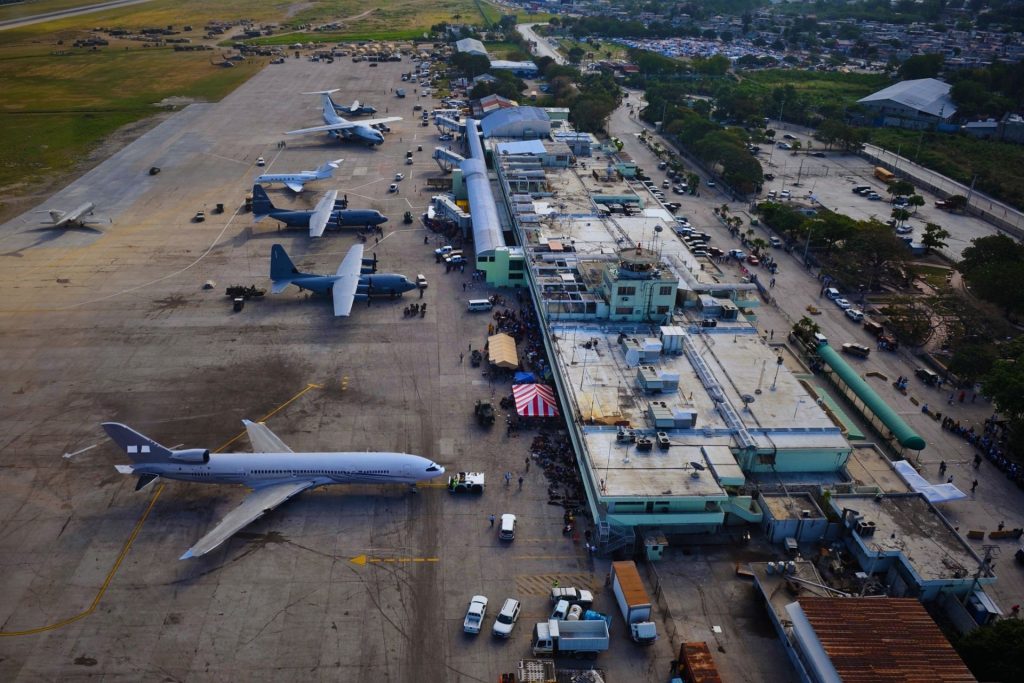
By: Juan Ruesta Changman (30/03/2023).
This article analyzes the need to convert an airport into a logistics center for the management of humanitarian aid in the event of a large-scale earthquake, since -generally- its installed capacity is exceeded. Given this, the Operational Commands of the Joint Command of the Peruvian Armed Forces must be prepared to quickly overcome the critical moments after the earthquake and ensure the operation of the airport closest to the disaster zone in order to turn it into an efficient logistics center for the management of humanitarian aid. In view of the preparation phase of the Law of the National Disaster Risk Management System of Peru, it is essential that the Operational Commands organize the available resources and include entities or companies that can support the management of the airport, in order to increase the logistical capacity for the handling of large volumes of humanitarian aid.
¿Por qué es polémico hablar de sectores estratégicos?

En esta edición de nuestro pódcast, Pensamiento Estratégico, el Dr. Farid Kahhat, analista principal del CEEEP, reflexiona sobre por qué tiende a ser polémico hablar de “sectores estratégicos” en las economías de los estados.
Venezuelan Migration in Peru: Perceptions and Realities

By: Paul Vera Delzo (23/03/2023).
The deep crisis in Venezuela has generated the largest migratory flow in Latin America. It is estimated that, by the end of 2022, Peru -the second host country after Colombia- will have a population of Venezuelan migrants and refugees close to 1.45 million. In this regard, it is clear that no population is prepared either to forcibly leave their country of origin -due to the critical existing crisis- or to welcome a large number of immigrants in such a short time, generating a context of extreme vulnerability for the migrant population, as well as discomfort and even rejection in the host or receiving population. Achieving the full integration of the Venezuelan population into Peruvian society and economy requires the decisive involvement of the State and civil society with a view to promoting an intensive and progressive change of mentality among Peruvians (moving from rejection to empathy) through education and culture. Otherwise, situations could arise that seriously affect not only security, but also the stability required for the integral development of the country.
European and Maghrebi Dilemmas in the Western Sahel
By: Carlos Echeverría Jesús (14/03/2023).
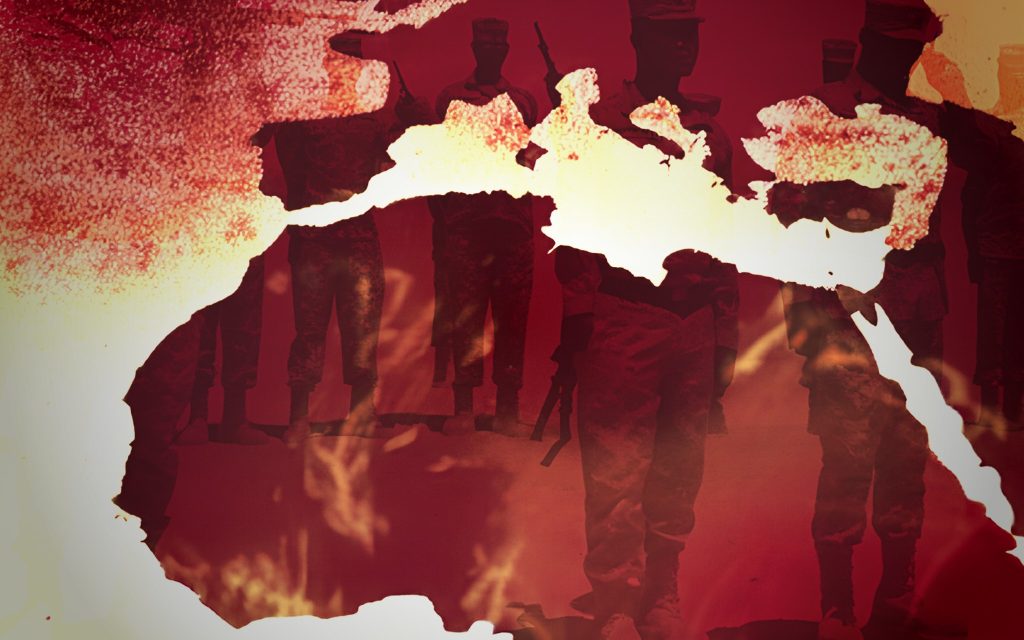
Two successive coups in Mali and two in Burkina Faso in recent times, consummating in both countries two military-led governments that take us back to old coup scenarios in Africa, make relations with both countries increasingly difficult for Western states that, with France at the head in terms of military contribution over the past decade, had been supporting their fight against powerful jihadist actors. The progressive deployment of Russia, both by regular means and with irregulars belonging to the private military company Wagner, and the efforts of two Maghreb countries, Morocco and Algeria, to reposition themselves in such a convulsive scenario, characterize the present and shape the future of this sub-region.

