


Strategic Leadership in the Army: Essential Roles and Competencies

By: Paul Vera Delzo (01/09/2022).
The development of leaders is a fundamental aspect for the future of any institution, even more so in the case of military institutions in the process of transformation, since the involvement of strategic leaders is a key element to achieve planned objectives. Therefore, knowledge and adequate practice of strategic leadership are critical factors to effectively guide any strategic process of institutional development. To do this, strategic leaders must not only know and understand the roles that they legitimately must assume, but also develop and optimize certain essential skills for their effective performance. In this sense, this article identifies and analyzes these roles and competencies.
Women Valuable Contribution to the Peruvian Army
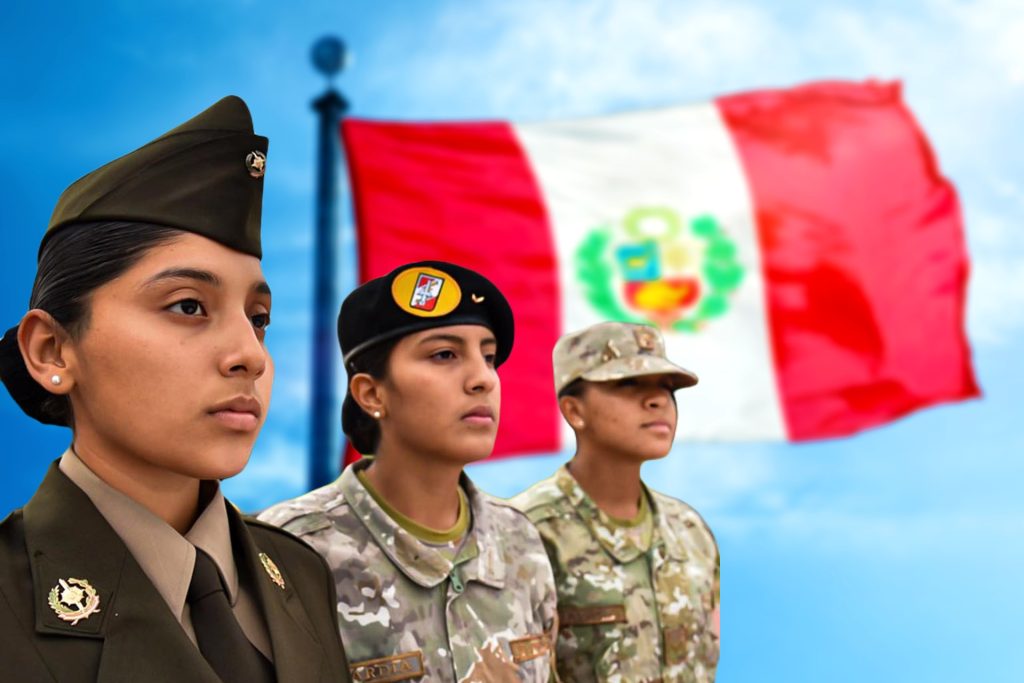
By: Lourdes Aurelia Barriga Abarca (25/08/2022).
Throughout history, women have had a marked presence in the work of the different military organizations that exist in Peru, as well as in the military actions that have taken place at all times. However, important changes took place in 1996 -thanks to the enactment of Law 26628 that expanded access for women to the Armed Forces Officers and Non-commissioned Officers Schools- which have promoted the significant role of Peruvian women in the military field. 25 years after enacting this law, the Peruvian Army currently has more than two thousand women in active service, who are deployed throughout the national territory assuming different functions, standing out in training abroad, or showing a noteworthy participation and performance in United Nations peacekeeping missions, achieving promotions and distinctions like their male colleagues. In this sense, this article shows the important contribution of women in the military history of Peru, as well as the progress and challenges in their process of joining the Army.
Organizational Culture and Leadership in the Army
Por: Edison Gelber Aguilar Sánchez (18/08/2022).
Actualmente, las instituciones deben contar con una cultura organizacional flexible que sirva de guía y permita a todos sus integrantes adaptarse a un mundo globalizado y en constante cambio. La cultura organizacional y el liderazgo son elementos que -a través del tiempo- han evidenciado cierta evolución en sus conceptos, generando un mayor impacto en instituciones militares. El líder debe gestionar nuevas herramientas que le permita no solo mejorar las relaciones humanas, sino también desarrollar el talento de su personal para alcanzar los objetivos propuestos. Por consiguiente, el Ejército debe ejecutar programas de formación para impulsar en su personal habilidades que les permitan ejercer un buen liderazgo. En tal sentido, en un mundo en permanente transformación, la cultura organizacional y el liderazgo son elementos importantes para el desarrollo del Ejército y para el desempeño efectivo de los Oficiales. En este artículo se describe la relación y las nuevas dimensiones que deben fortalecer el desarrollo de ambos elementos en el Ejército.
Social Media, Geopolitics and Power

Por: Gonzalo Javier Rubio Piñeiro (04/08/2022).
Cyberspace is presented as a virtual area practically free of restrictions, gaining relevance for both leisure and work, not to mention the increase in cybercrime. Unfortunately, areas such as poverty, malnutrition and insecurity are not relevant to geopolitical analyses of the countries that fight for hegemony, but power and influence are. Geopolitical relationship and social networks are framed in the need to exert influence and project the power of state actors of international weight, such as the United States, the People’s Republic of China and Russia. This situation makes it clear that States continue to be significant actors in world politics, mainly those that have developed important capacities and tools for the protection of their interests, among which is the Information War.
The Evolution of Peru’s Multidimensional Challenges: Engagement with China
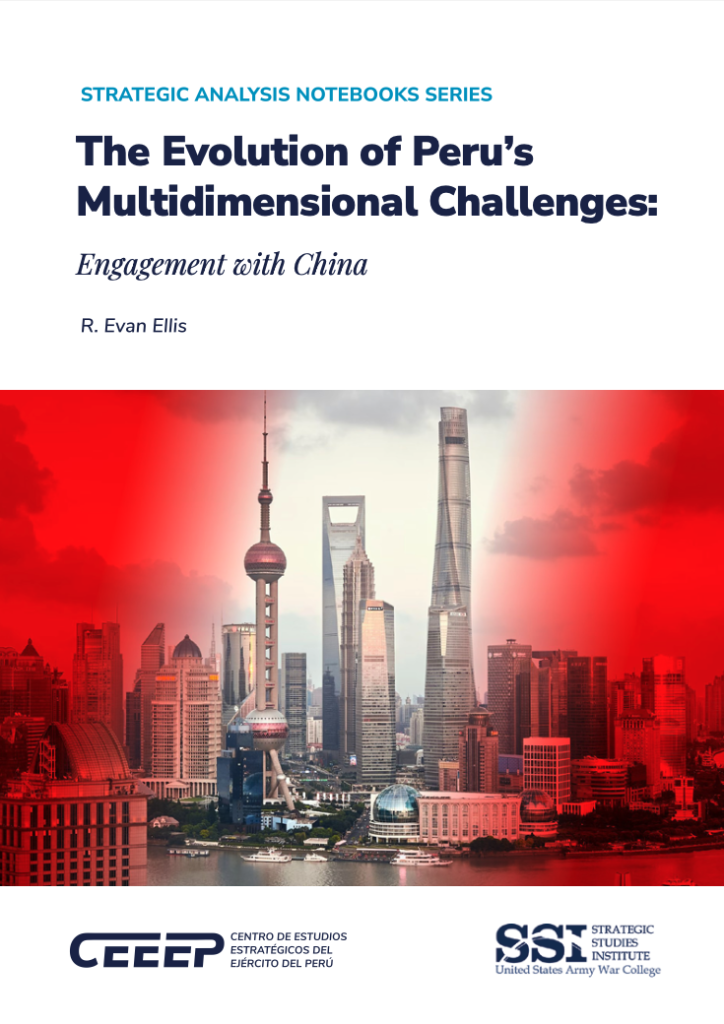
By Evan Ellis. This publication is possible thanks to a collaboration between the Strategic Studies Institute – U.S. Army War College (SSI) and the Peruvian Army Center for Strategic Studies (CEEEP).
The Evolution of Peru’s Multidimensional Challenges: Transnational Organized Crime
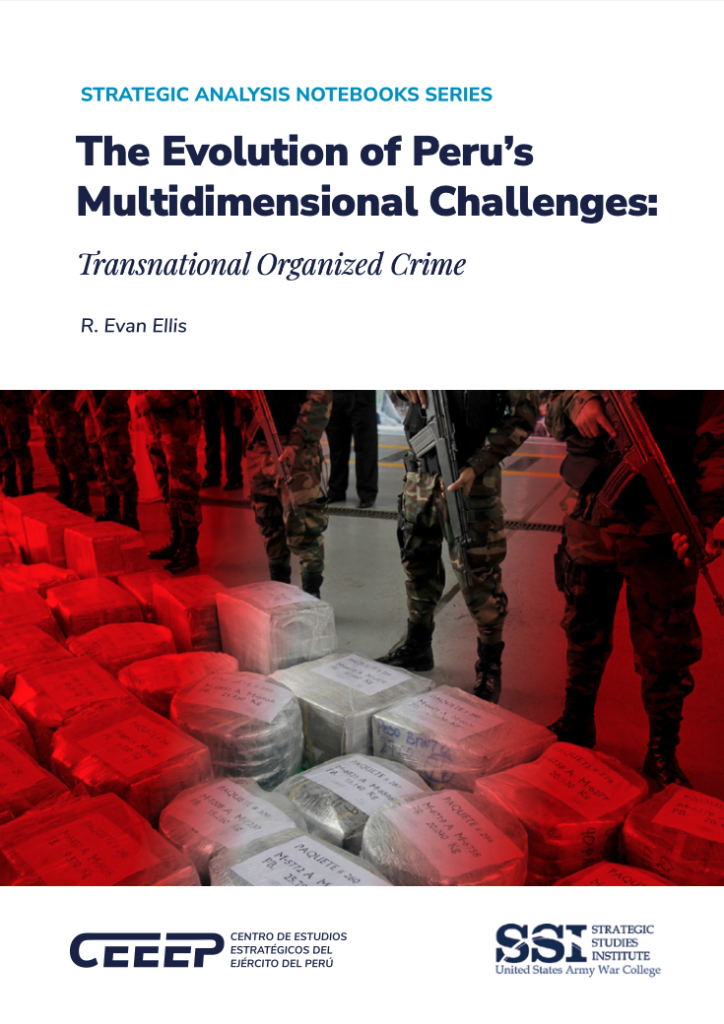
By Evan Ellis. This publication is possible thanks to a collaboration between the Strategic Studies Institute – U.S. Army War College (SSI) and the Peruvian Army Center for Strategic Studies (CEEEP).
Ukraine Conflict: Hybrid Warfare and Conventional Military Intervention

By: Josías Valle (07/07/2022).
The war between Russia and Ukraine represents one of the most significant challenges to the Kremlin in its recent history. Undoubtedly, one of the main objectives of Moscow’s power game is to occupy geographical spaces on its western border to repel any action that contravenes its geopolitical interests. The use of military and non-military means by Russia -whose actions are defined as a “hybrid war”- become the main strategy to confront any advance by the West on its immediate borders.
China’s Digital Advance in Latin America

By: Evan Ellis (30/06/2022).
This work examines activities by the People’s Republic of China (PRC) and its companies in digital technologies and associated economic sectors in Latin America, including telecommunications, surveillance, eCommerce, fintech, data centers, and smart cities. It finds that, despite obstacles arising from both resistance in the region and internal PRC politics, Chinese companies have made significant advances in these sectors, creating opportunities for them to leverage these positions to advance in other areas, while also giving them significant opportunities to collect intelligence on both government and commercial targets, putting at risk the ability of its governments to make sovereign decisions about the PRC and its companies, and to protect the intellectual property of the companies operating within its territory.
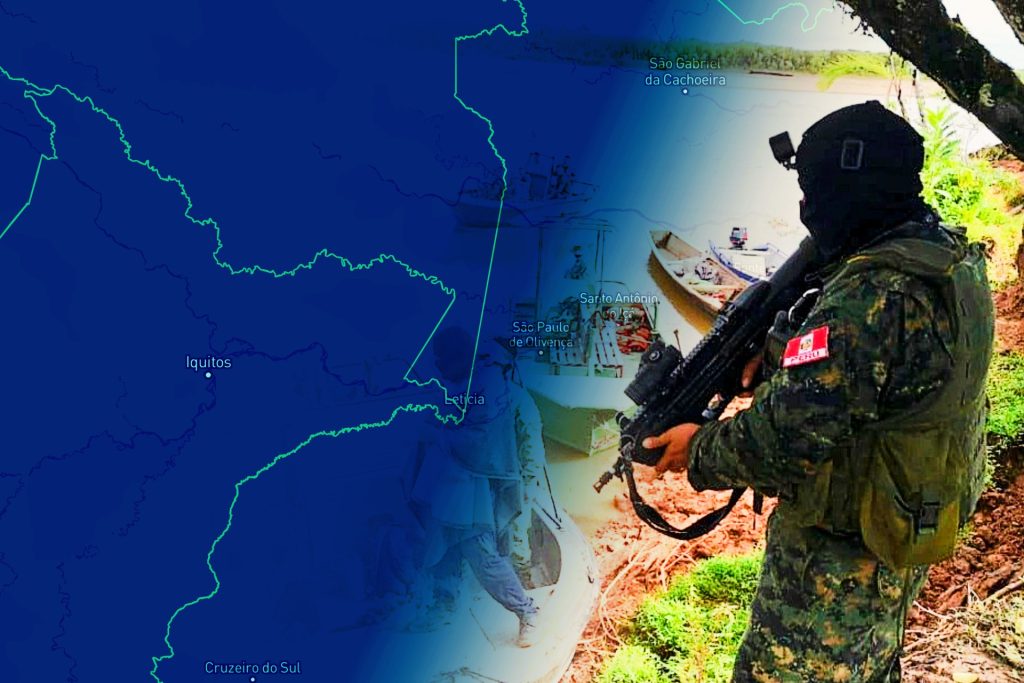
Putumayo: Back door of drug trafficking in the Peruvian Northeast
By: Daniel Herrera Guerra (14/06/2022).
In Peru, the different governments of the day have applied centralist development policies that have left large areas of territory neglected, without an effective presence of the State. The Putumayo area, which delimits the border with Colombia through the river of the same name, is one of these places where drug trafficking and other related crimes are proliferating, and where criminal organizations not only affect national security and sovereignty, they also harm the development of the region.
Los Niveles de la Guerra

El Tte Crl EP Richard Villanueva nos habla sobre “Los Niveles de la Guerra”

