


Cyber Defense Sector Policy: an urgent need

By: Ernesto Castillo Fuerman (18/11/2021).
The critical infrastructures of a country, the command and control systems, as well as the weapons systems have computer platforms for their operation; However, as a result of a cyberattack, these platforms could become useless and paralyze a country, putting National Security, Defense and Development at risk. Therefore, it is essential to have a Sectorial Cyber Defense Policy, whose objectives and guidelines allow strengthening the development of capacities to neutralize threats and attacks in and through cyberspace, promoting culture, education, as well as Investigation, Development and Innovation. (I + D + i) in cyber defense among the Armed Institutions. This article analyzes the situation of Cyber Defense in Peru and proposes the statement, as well as the objectives and guidelines of the necessary Sectorial Cyber Defense Policy that the Peruvian State should have.
Jihadist Violence in Mozambique and the International Response

By: Alba Vega Tapia y Jesús Díez Alcalde (09/11/2021).
In recent years, jihadist actions in Mozambique have evolved rapidly and dramatically, showing an escalation of attacks, violence and brutality that has no signs of improving. Deep social discontent, feelings of frustration and lack of expectations have become the perfect breeding ground for this jihadist movement to take root, causing an unprecedented humanitarian crisis in one of the most impoverished regions of Africa and demonstrating the rapid spread of jihadism in Africa. International cooperation has begun to deploy military missions in Mozambique; however, the security measures will not be enough to end this international threat that has settled in the north of the country.
Panama’s Maritime Business and the Evolving Strategic Landscape

By: R. Evan Ellis y Eddie Tapiero(27/10/2021).
Panama’s maritime business is being transformed by the complex interaction between multiple factors. These include the growing economic and political power of China and US-China competition, the long-term structural impacts of Covid-19 on both the region and global trade, US policies to contain immigration from the Northern Triangle, climate change, the rise of leftist populism in the region, the China-Taiwan competition, technology trends, evolution of regional infrastructure, and the restructuring of the maritime shipping industry itself. Demand for the Canal and associated ports will likely remain strong, but the composition of that traffic, the routes, the operators, and the role of complementary and competing facilities elsewhere in the region will likely transform dramatically in the coming generation.
Hezbollah. The party of God, its idiosyncrasies and its possible global threat

By: Mariano López de Miguel. This is a Peruvian Army Center for Strategic Studies (CEEEP) publication.
El Cambio de la Cultura Organizacional

El Tte Crl EP Richard Villanueva nos habla sobre el cambio de cultura organizacional en organizaciones maduras, como el Ejército.
La caótica situación estratégica en Afganistán

Conversamos con el profesor Vicente Torrijos Rivera, colaborador del CEEEP, sobre la situación estratégica en Afganistán, luego de la retirada de los Estados Unidos y de sus principales aliados occidentales.
Apoplectic diplomacy. What can be learned from the chaotic strategic situation in Afghanistan

By: Vicente Torrijos (28/08/2021).
What is happening in Afghanistan will cause many misfortunes and regrets not only in the United States, but also throughout the Western Hemisphere. In practice, the fall of the country into the hands of the Taliban takes the situation back to 2001 in such a way, that it is legitimate to ask: What was the point of sacrificing two thousand lives, activating the Atlantic Alliance for the first time in its history and investing more than a trillion dollars over twenty years? Of course, it can be argued that history is not static, that there is no valid determinism and that, for example, Vietnam was already, in 1995, twenty years after its victory, a country connected to the United States without the need for Washington to stay in Hanoi indefinitely.
El campo de batalla del futuro que quizá ya es presente

Conversamos con el Coronel Carlos Javier Frías Sánchez del Instituto Español de Estudios Estratégicos sobre el impacto del empleo de nuevas tecnologías en el campo de batalla y su evolución.
In English, ‘fake news’ does not expire
By: Andrés González Martín (06/08/2021).
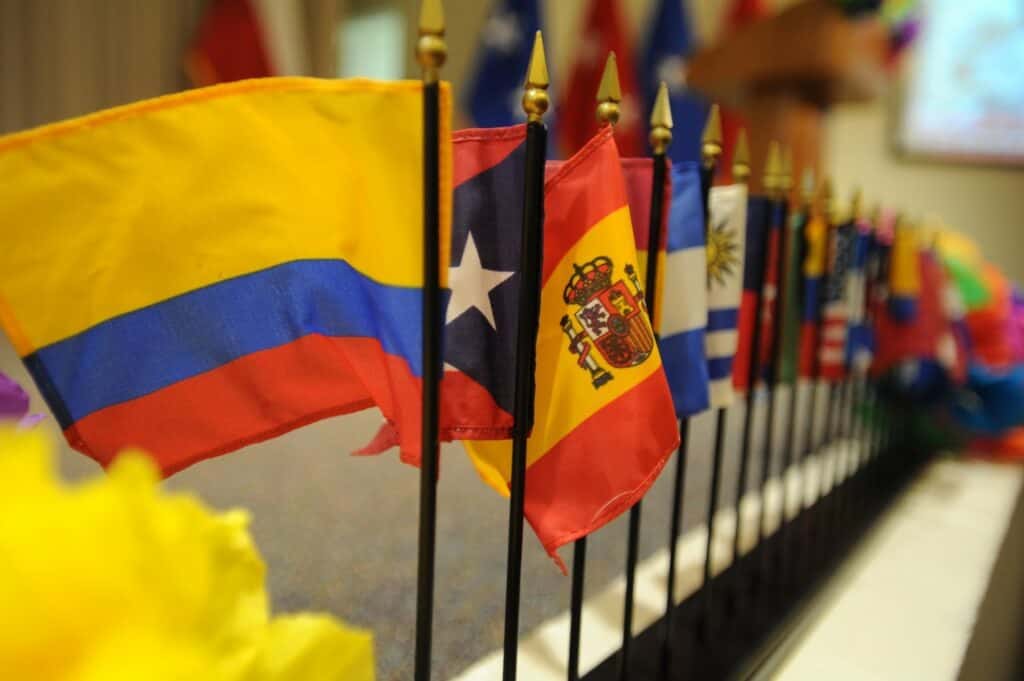
The cultural insularity of the English-speaking reading public is a factor in the limited presence of works translated from other languages in the English-speaking publishing market. Even after 9/11, some people still think that the history of the English-speaking peoples is the history of humanity, everything else being just an anthropological curiosity. The result is that more is written about Ibero-America in the English-speaking world than is read about Ibero-Americans. Americans know Ibero-Americans through specialists of their own nationality, without having direct access to the voices and realities of the region.
Mexico: A Deepening Crisis and Strategic Challenge for the US
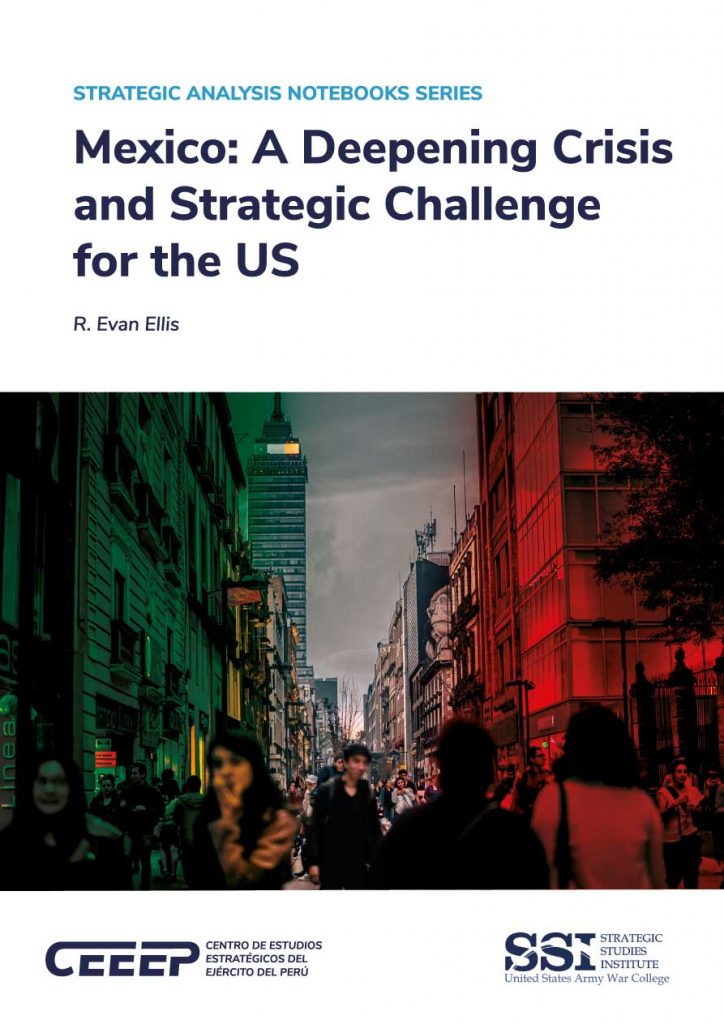
By Evan Ellis. This publication is possible thanks to a collaboration between the Strategic Studies Institute – U.S. Army War College (SSI) and the Peruvian Army Center for Strategic Studies (CEEEP).

