


Defense Sector Budget: Trends and impact of COVID-19
By: Luis Chávez Valdivia (15/02/2022).
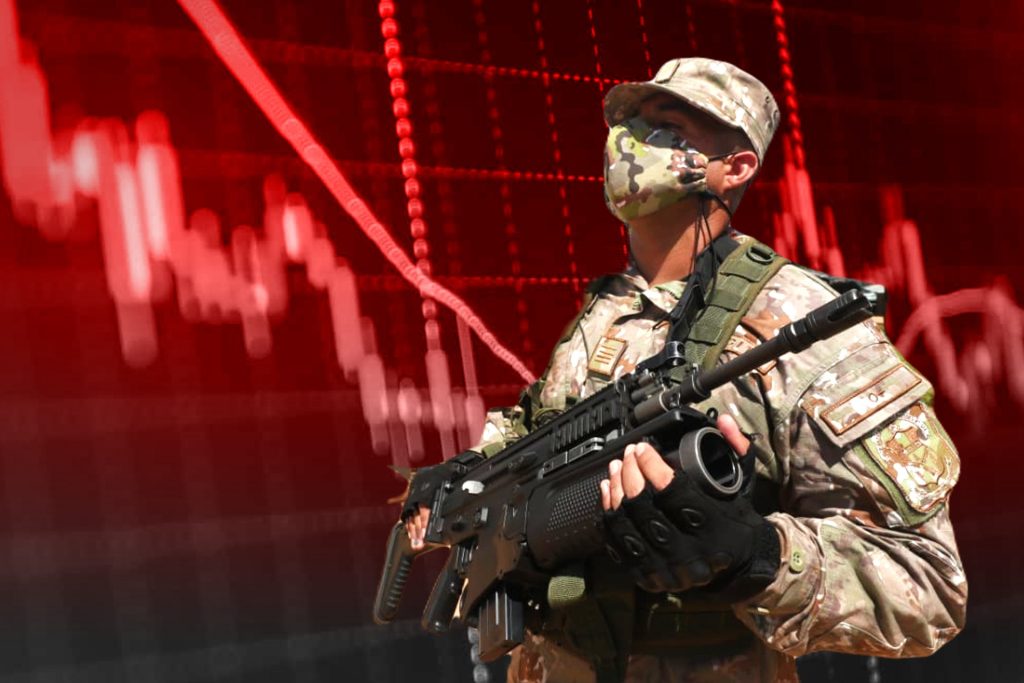
This article analyzes the current economic situation facing the Defense Sheet and how it will be affected in the fulfillment of its objectives. Likewise, the budgetary behavior of the Defense Statement is observed to better understand the actions or reactions, as a prospective method that helps the administration to be able to face these challenges efficiently and achieve quality in budgetary spending.
Russia’s Latest Return to Latin America
By: Evan Ellis (01/02/2022).
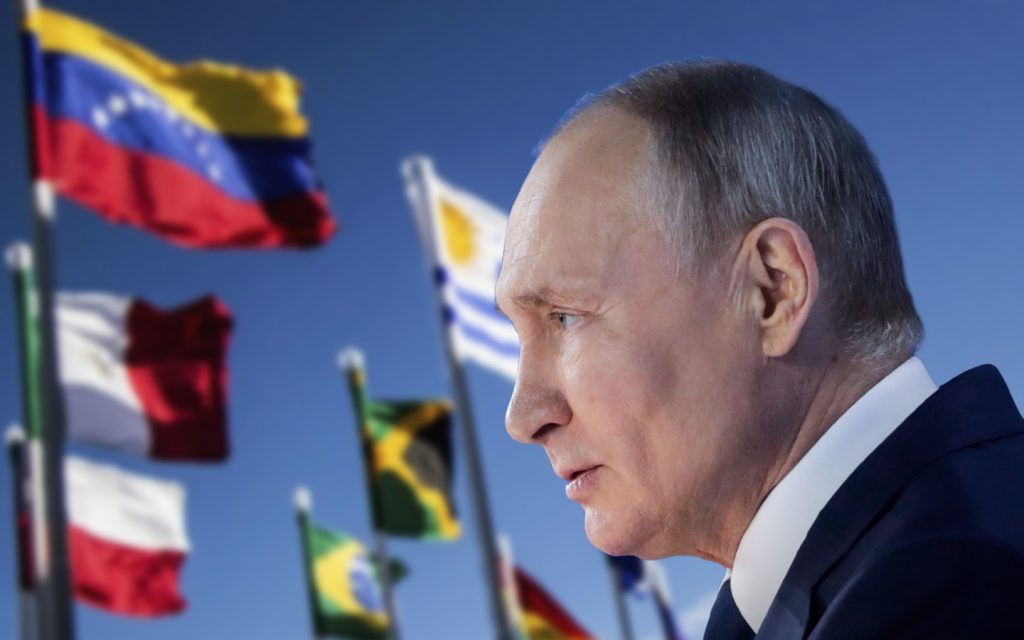
Russia’s contemporary ability to project a presence in Latin America and the Caribbean is a function of several interdependent factors: (1) anti-U.S. populist regimes willing to work with it; (2) the enabling role of Chinese money; (3) the legacy of Russia’s Cold War military and other ties to the region; (4) key industries in which Russian activity and investment offers some value to the region, including military, nuclear, space, and petroleum industries, as well as its agricultural purchases; and (5) Russia’s information warfare capabilities.
“Belt and Road” Initiative in Peru: Impact, opportunities and challenges

By: Mario Caceres Solis (25/01/2022).
The “Belt and Road Initiative” (IFR) constitutes one of the most important strategies of the People’s Republic of China (PRC) to achieve economic hegemony and world leadership. At present, many countries -including Peru- negotiate and coordinate their entry and participation in this project in order to obtain benefits for their citizens; however, the existing asymmetry forces us to be better prepared to generate tangible benefits. In this regard, this article presents an evaluation of the impacts, opportunities and challenges that Peru will have in the face of what its participation in the IFR means, setting guidelines for obtaining expected results in a global environment of crisis and needs, as well as of struggles between the United States and the PRC for economic leadership.
Venezuela: Understanding political, external, and criminal actors in an authoritarian State

By Evan Ellis. This publication is possible thanks to a collaboration between the Strategic Studies Institute – U.S. Army War College (SSI) and the Peruvian Army Center for Strategic Studies (CEEEP).
Artificial Intelligence in National Security: Legal Limits

By: Jean Carlo Cuba (11/01/2022).
Terms such as big data, mechatronics and sensorization, decision making, neuromorphic computing and computer perception are some of the concepts and technologies integrated into National Security that are constantly evolving. These scientific advances have the existing national and international legislation as the only limit to avoid their indiscriminate use. In this sense, this article analyzes the current and possible uses of Artificial Intelligence as a means that are added to different attack and defense strategies within the framework of National Security, as well as whether the existing legislation to limit its use complies with its purpose.
Professional Skills: An unavoidable requirement in public management

By: Emilio Cam (29/12/2021).
After briefly showing the general scenario of the selection process of trusted officials in public management, this article highlights that civic culture is the first condition that every servant must have; However, the Civil Service Law indicates that the way in which trusted servants are appointed is done without competition and on the basis of the discretionary power of the official who has that power. This situation not only violates and affects the meritocracy contemplated in that same Law, including ethics in public management, but also allows hiring servants without requiring or evaluating the Professional Competencies designed for the different positions. In this way, the thesis is confirmed that by not requiring adequate professional skills in the process of appointing trusted officials, the principle of meritocracy, ethics in public management, political culture and decision-making are affected of relevant aspects, including Security and National Defense.
Challenges Facing Chile’s Next Government: Part 2

By: Evan Ellis (18/12/2021).
In Part 1 of this work, I described the challenges facing Gabriel Boric and José Antonio Kast—the two candidates in the Chilean presidential runoff on Sunday, December 19—as they attempt to win the election and navigate the politics of the Constituent Assembly. The election is only the beginning of a turbulent time for Chile’s political and economic future, as whichever candidate wins will face obstacles in implementing his agenda.
Challenges Facing Chile’s Next Government: Part 1

By: Evan Ellis (14/12/2021).
On December 19, Chile will conduct the second round of its presidential election, which will likely decide the direction of the country and shape the political dynamics of the region. The eloquent, left-oriented former student protest leader Gabriel Boric will face off against social conservative José Antonio Kast. It is a highly symbolic contest, posing a positive, if selective, narrative about Chile’s past and its remarkable transformation, against a new generation’s discontent with some parts of that transformation and the problems it has generated or failed to resolve.
Nicaragua’s Flip to China: What Does It Mean for the Region?

By: Evan Ellis (10/12/2021).
Nicaragua’s diplomatic flip from Taiwan to the People’s Republic of China (PRC), announced on December 9, was almost inevitable, but it will accelerate a worrisome trend in parts of the Western Hemisphere closest to the U.S. to a China-funded form of authoritarian populism. That growing threat, in a part of the hemisphere once considered politically allied or at least compliant with the U.S., will also include secondary risks from an expanded presence by other U.S. rivals such as Russia and Iran, expanded drug and other organized crime flows through the region, and decreased security cooperation. That combination will have grave strategic consequences for the United States.
The Coming Xiomara Castro Presidency in Honduras: Implications for the US and the Region

By: Evan Ellis (25/11/2021).
On November 28, 2021, Honduras will elect a new President, a new Congress, and 20 representatives to the Central American Parliament (commonly known as Parlacen). Polls indicate that Libre party candidate Xiomara Castro, whose platform pledges to refound Honduras as a “socialist democratic state”, is likely to beat out her principal rivals (National Party candidate Nazry Asfura, and Liberal Party candidate Yani Rosenthal) to become Honduras’ next President.

