


Three missed opportunities in Afghanistan

By: José Luis Calvo Albero (07/109/2021).
The tragic evacuation of Kabul, after 20 years of efforts to stabilize Afghanistan, should open a period of critical reflection. Post-hoc criticism runs the risk of falling into simplistic, and sometimes unfair, analysis, but it is essential to learn from the mistakes made and avoid, as far as possible, repeating them in the future.
South Atlantic: the role and regional security faced with the projection and construction of power by the United States and China

By: María Ana Leal (30/09/2021).
The South Atlantic region is internationally relevant not only because of the large reserves of strategic natural resources that it possesses, but also because of its proximity to Antarctica, the existence of the bi-oceanic canal, current and future demands in the area of transportation and international trade, as well as the access to aerospace projection and cyberspace, among others. These aspects are valued both by the sovereign countries of the region and by international economic and military powers such as the United States and the People’s Republic of China, who have incorporated the South American region into their foreign policy planning, with conflicting interests between these actors.
Apoplectic diplomacy. What can be learned from the chaotic strategic situation in Afghanistan

By: Vicente Torrijos (28/08/2021).
What is happening in Afghanistan will cause many misfortunes and regrets not only in the United States, but also throughout the Western Hemisphere. In practice, the fall of the country into the hands of the Taliban takes the situation back to 2001 in such a way, that it is legitimate to ask: What was the point of sacrificing two thousand lives, activating the Atlantic Alliance for the first time in its history and investing more than a trillion dollars over twenty years? Of course, it can be argued that history is not static, that there is no valid determinism and that, for example, Vietnam was already, in 1995, twenty years after its victory, a country connected to the United States without the need for Washington to stay in Hanoi indefinitely.
In English, ‘fake news’ does not expire
By: Andrés González Martín (06/08/2021).
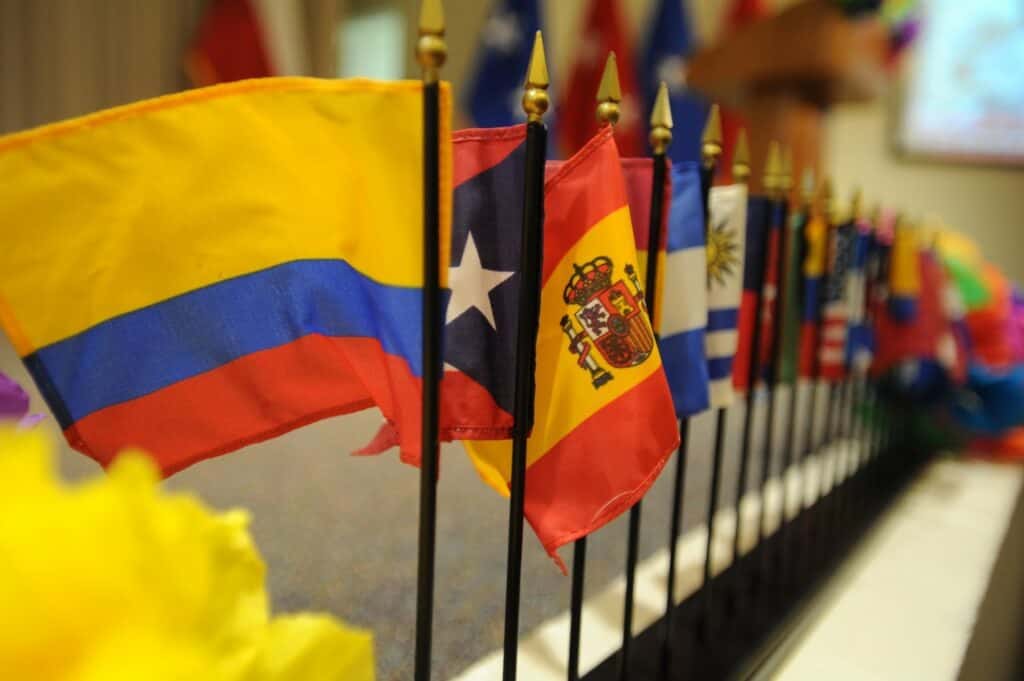
The cultural insularity of the English-speaking reading public is a factor in the limited presence of works translated from other languages in the English-speaking publishing market. Even after 9/11, some people still think that the history of the English-speaking peoples is the history of humanity, everything else being just an anthropological curiosity. The result is that more is written about Ibero-America in the English-speaking world than is read about Ibero-Americans. Americans know Ibero-Americans through specialists of their own nationality, without having direct access to the voices and realities of the region.
Future battlefield that maybe already be present

By: Carlos Frías Sánchez (21/07/2021).
Technical progress in sensors, guided weaponry, artificial intelligence and UAVs will have a major impact on future combat. In the same sense, the reduction in size of the Armies and the increasing difficulties to replace losses will imply also major changes in their way to operate. The aggregation of both phenomena brings to the fore the old Soviet concept of the “reconnaissance-strike systems” (RUK) which foresaw a fundamental change in the way the Armies’ would fight, due to the technologic advance in the aforementioned areas. As the technology is constantly advancing precisely in these fields, most probably, future combat will present many of the features described by the Soviet theorists for their RUK in the past 80s. The development of the recent fight in Libya and, especially, in Nagorno-Karabakh seem to lead us to that outcome.
Is it time to establish a security architecture in the Middle East?
By: Felipe Sánchez Tapia (01/07/2021).
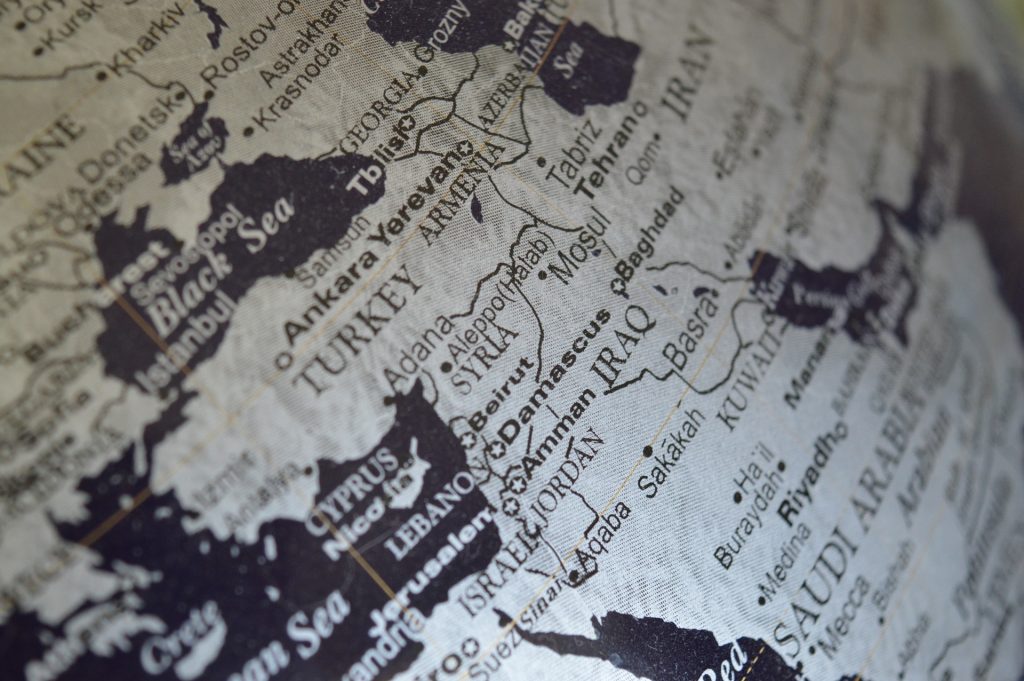
For decades, the development of collective defense, collective security, and more recently, cooperative security structures in one of the most unstable regions of the globe, has been unsuccessful. The differences between the regional powers’ respective geopolitical visions and the global powers’ conflicting interests, have operated as an obstacle that is, thus far, insurmountable. Nevertheless, despite the regional polarization and great unrest, there currently exist opportunities that could be seized by global powers, particularly by the United States, in order to advance their global interests.
Crisis in Ukraine and the rise of Russia in the post-Soviet era: a geopolitical look at Moscow

By: Josías Valle (24/06/2021).
This article analyzes the crisis in Ukraine, after the events of 2013 and 2014, which generated changes in Ukrainian politics, particularly due to the projection of Russia in an area that par excellence awakens the rebirth of Moscow. Starting from this scenario, it is shown how the current conflict in Ukraine, generated by a revival of Russia in the post-Soviet era, translates as the ultimate goal of the Kremlin to contain any initiative that Kiev intends to carry out with the European Union and with the United States, Moscow’s main rivals.
Thucydides’ Exhortation

By: Andrés González Martín (16/06/2021).
Contemporary military, strategic and geopolitical thinking written in Spanish is poor but Ibero-American history and experience is a real gold mine. It is especially a gold mine when it comes to thinking, rethinking, and writing about irregular warfare and the grey zone. The debt is not to the forgotten past but to the future. A shared historical vision, a common strategic and geopolitical thinking, would provide Ibero-America a vector of integration that in the long term would have important returns. We need an Ibero-American school of strategic and geopolitical thought and the study of military history to win the right to be heard in areas where we have no voice, both at home and abroad.
Twenty-five centuries ago, Thucydides, in his Peloponnesian War, warned us that “a nation that draws too broad a difference between its scholars and its warriors will have its thinking being done by cowards and its fighting done by fools”.
New threats to National Security: A pending solution

By: Victor Bautista Valle (03/06/2021).
Organized crime, common crime, illicit arms trafficking, human trafficking, illegal mining, health emergencies, among others, not only disturb the well-being of citizens but also affect the development of a country. In Peru, in addition to these threats, there are others that persist over time, such as terrorism and drug trafficking. In this article, statistical data of some of the threats that affect the security of the Peruvian State is analyzed in order to better understand their dimension and scope, but -mainly- with the purpose that the top decision-makers of the State adopt the necessary actions to deal with them effectively.
Approaches and Challenges of Peru’s National Defense and Security Policy

By: Paul Vera Delzo (26/05/2021).
In 2017, the National Security and Defense Council (COSEDENA) approved the National Security and Defense Policy (PSDN) in order to strengthen the operation of the National Defense System (SIDENA). This policy, still in force, contains three objectives and twenty-nine guidelines, which should guide the activities of all the actors involved in National Security and Defense.

