


Reflection on the Future of the Military Transformation
By: Jaime Guillermo García Covarrubias (24/11/2022).
This article analyzes the essence of military transformation and proposes a methodology for its better understanding and application for an armed organization. It is suggested that military transformation be a permanent process of adaptation, not only in the face of new forms of conflict but also in the face of changes that occur in the sphere of society. Therefore, the understanding of the triads of the areas involved in the analysis methodology acquires significant importance. Threat vectors are also presented, warning that their normal uniqueness will be a combination of these dangers. In this sense, the development of disruptive technologies and their effect on the cognitive and social sphere require special attention since they will shape the years of present and future generations.
Political regime and performance in war

In the third edition of our podcast, Pensamiento Estratégico, CEEEP Senior Analyst Dr. Farid Kahhat explains Russian President Vladimir Putin’s miscalculations in the war in Ukraine, using the concepts of political regime and war performance in international relations theory.
Transnational Organized Crime in the Triple Border between Brazil, Colombia and Peru
By: Juan Carlos Aristizabal González (17/11/2022).
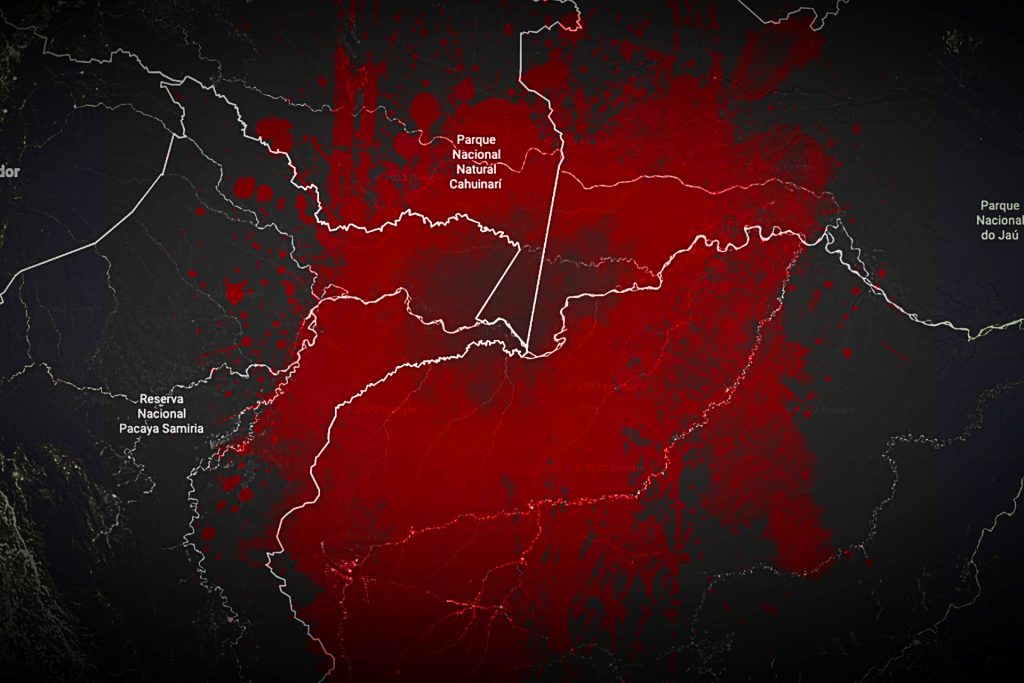
The triple border between Brazil, Colombia and Peru, due to its characteristics and vulnerabilities, has become an area where organizations involved in transnational organized crime (TOC) converge. In this regard, this article analyzes the interaction of organized armed groups and organized crime groups with the TOC, which is reinforced through illicit economies on the borders of these three countries. It also describes the effects of the TOC and analyzes whether the mechanisms and strategies to combat it -conceived in the Defense and Security Policies- have achieved the expected results.
Régimen político y desempeño en guerra

En la tercera edición de nuestro pódcast, Pensamiento Estratégico, el Dr. Farid Kahhat, analista principal del CEEEP, explica los errores de cálculo del presidente ruso, Vladímir Putin, en la guerra en Ucrania, utilizando los conceptos de régimen político y desempeño en guerra, en la teoría de relaciones internacionales.
The nuclear risk in Ukraine

In the second edition of our podcast, “Pensamiento Estratégico”, CEEEP Senior Analyst Dr. Farid Kahhat talks about the nuclear risk in Ukraine, following Russian President Vladimir Putin’s pronouncements. Available in Spanish only.
Argentina’s Strategic Game Facing China’s and U.S. Interests
By: María Ana Leal (02/11/2022).
The interests of the great economic and military powers determine – and even condition – many of the dynamics and decisions of medium-sized countries such as Argentina and will continue to do so within the framework of a certain margin of autonomy that these States can acquire through intelligent actions. In this sense, it is possible to redefine a foreign and national defense policy based on the prevalence of a strategic culture that does not necessarily share the guidelines and preferences of the country that concentrates the greatest world power, with all that this implies. This article analyzes the strategic cultures, threat perceptions, and behaviors of both the People’s Republic of China and the United States in Argentina in order to understand the actors involved.
El riesgo nuclear en Ucrania

En la segunda edición de nuestro pódcast, Pensamiento Estratégico, el Dr. Farid Kahhat, analista principal del CEEEP, nos habla sobre el riesgo nuclear en Ucrania, luego de los pronunciamientos del presidente ruso, Vladímir Putin.
Lethal Autonomous Weapons: Means of Defense and Attack
By: Adolfo Arreola (27/10/2022).
The deployment and use of lethal autonomous weapons (LAW) systems with self-determination in their critical functions can have an impact on international security by initiating a new arms race, promoting the escalation of unpremeditated violence, and lowering the threshold for the legitimate use of force for decision-makers. In this regard, this article identifies some of the military applications assigned or potentially assignable to LAWs and analyzes the challenges for their use in twenty-first century conflicts.
Economic interdependence and war: The example of Ukraine

In the first edition of our podcast “Pensamiento Estratégico”, CEEEP Senior Analyst Dr. Farid Kahhat talks about economic interdependence and war, using Ukraine as an example. Available in Spanish only.
Visit from the Defense Attaché from Spain in Peru to the Peruvian Army Center for Strategic Studies
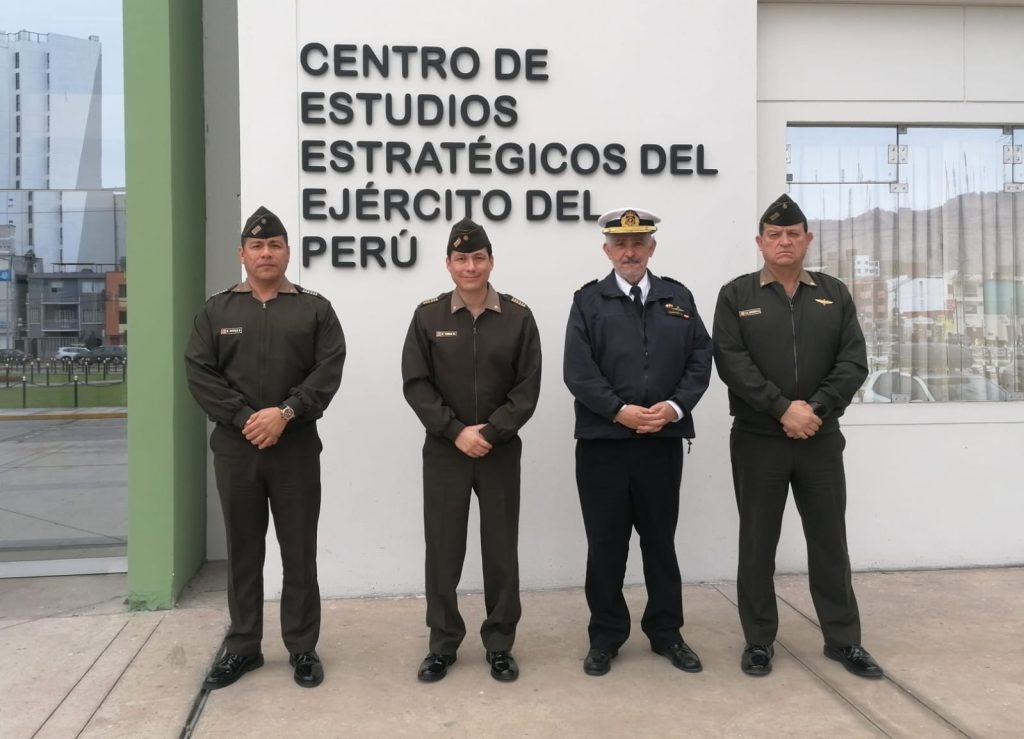
On November 18th, the Defense Attaché from the Spanish Embassy in Peru, Navy Captain Diego Carriazo Hernández, along with the Sub-Director for the Attaché and Liaison Office from the Army’s Foreign Affairs Office Colonel César Alex Guerrero Rodríguez, visited the Peruvian Army Center for Strategic Studies (CEEEP) to get to know the work being carried out in the Center and further the bonds of academic cooperation between countries.

