


Opportunities and Risks with Argentina’s New Government

By: Evan Ellis (08/12/2023). The incoming administration of Argentina’s current president, Javier Milei, faces a complex situation in the face of significant economic and political challenges. The financial and fiscal crisis amplifies the potentially adverse effects of his radical approach, restricting the government’s options. The impending Argentine currency devaluation and its debt with the International Monetary Fund (IMF) generate additional pressure. Fiscal decisions, such as the use of Chinese funds, provoke tensions in contrast to campaign promises. Declining agricultural revenues and political resistance add to the complexity of the challenges. President Milei’s limited political backing complicates the implementation of reforms, intensifying uncertainty for investors and encouraging capital flight.
Importance of the Logistic Operations of the Colombian National Army in Times of Pandemic
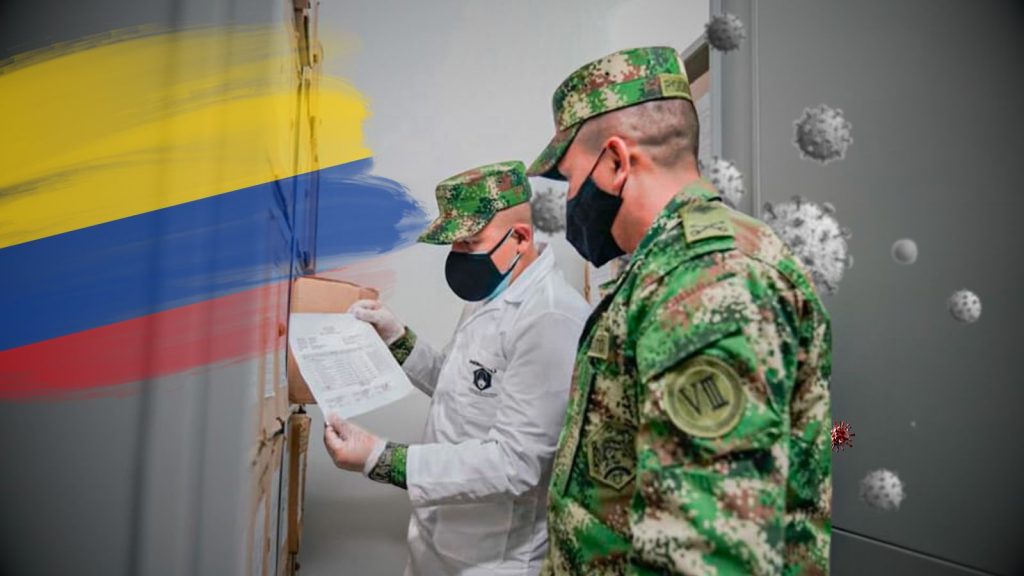
By: Cesar Augusto Vargas Guarín (30/11/2023). Colombia is a country with an area of 1 141 748 km², located in the extreme north of South America. Its geography is determined by tropical forests and mountains and it is the third country with the largest population, with about 52 318 261 million inhabitants; after Brazil and Mexico. These characteristics influence the operational performance of the Military Forces (FFMM) in general and the Colombian National Army (EJC) in particular. In this way, the EJC conducts military operations aimed at defending sovereignty, independence and territorial integrity, as well as protecting the civilian population, private and state resources, in order to generate an environment of peace, security and development that guarantees the constitutional order of the nation.
Amazon Protection Brigades: A National Security and Resource Preservation Issue

By: Manolo Eduardo Villagra (23/11/2023).The Peruvian Amazon faces imminent threats that require urgent and coordinated action by the State. In this context, the article aims to highlight the importance of activating the Amazon Protection Brigades, a crucial measure aimed at preserving biodiversity, strategic resources and, therefore, national sovereignty. The article examines geostrategic relevance of the Amazon, emphasizing the primary role of the Armed Forces, especially the Peruvian Army (EP), in addressing this mission.
Iran’ Re-engagement with Latin America

By: Evan Ellis (09/11/2023). The article presents the resumption of Iran’s relations with Latin America and the opportunities this offers for political and economic interaction. It highlights Iran’s acceptance into the BRICS during the organization’s summit in Johannesburg in 2023, which accelerated the reestablishment of Iran’s contacts with the international community. In addition, China’s role in its economic strengthening is mentioned, as well as its encouragement to Latin American and Caribbean governments to collaborate without concern for the U.S. Overall, a broad view is offered on the current state of Iran-Latin America relations and the challenges and opportunities that this entails.
The New Configuration of World Power China and India: Conflicts and Coalitions

By: Jean Carlo Cuba Yaranga (02/11/2023). The reconfiguration of the map of power in the world is starting to be located on the Asian continent. Both China and India are increasingly exerting influence in various fields; However, there is a border conflict between the two nations and constant displays of military power that do not reach total confrontation, due to a shared pragmatic vision. In this article, we will proceed to analyze the agreements and disagreements that occur between these powers, the intervention of various actors and the role of politics in each of their actions, in a world scenario where war operations prevail.
Artificial Intelligence in the Military Field: A Relevant and Useful Tool

By: Vitorio Enmanuele Bossio Ballesteros (26/10/23). This article discusses the benefits and considerations of using Artificial Intelligence (AI) in the decision-making process in the military arena. It focuses on three main aspects: the ability to provide faster and more accurate information, situational mastery and the reduction of human error, as well as the technical and ethical considerations that must be taken into account when using this technology. The author argues that AI can significantly improve decision-making in the military realm; however, it is important to reflect on the ethical and technical implications associated with its use.
Security Challenges Facing the Dominican Republic and the Government Response

By: Evan Ellis (18/10/2023). From September 24-28, 2023, a trip was made to Santo Domingo, Dominican Republic, to present a paper on crime and violence in the Caribbean at a forum organized by Funglode, one of the country’s leading think tanks. As part of this visit, he held a dialogue with a wide range of former and current security personnel and other experts on the security challenges facing the nation.
Use of Military Power: Flexibility and Scope of non-kinetic capabilities

By: Vitorio Enmanuele Bossio Ballesteros (05/10/2023). The complexity of threats to the security and defense of States merits the use of military power in a resolute, gradual, flexible and wide-ranging manner to control the escalation of the conflict, while maintaining its high coercive potential. In that sense, non-kinetic capabilities, beyond contributing to the development of conventional military operations, provide a wide range of options for applying military power below the threshold of armed conflict, since they provide flexibility and greater scope to the design and execution of a military response.
Legal Scope for the Use of Force During Coast Guard Operations: An Unfinished Issue

By: Eduardo Israel Zamora Chung (28/09/2023}. Industrial and productive activities in the aquatic field, which promote the socioeconomic development of the country, require that the General Directorate of Captaincies and Coast Guard of the Peruvian Navy – National Maritime Authority, guarantee their safety. To this end, Coast Guard Operations, conducted within the exercise of the Maritime Authority, must be framed in due legal process. In this regard, it is essential that this authority has clear rules for the proper use of force, since, currently, it lacks an adequate legal framework that legally safeguards its personnel and makes its response capacity more efficient.
Challenges of the Use of the Armed Forces in Support of the Peruvian National Police for Citizen Security

By: Miguel Ángel Contreras Gallejos (21/09/2023). Citizen security is the responsibility of society as a whole, involving not only state entities, but also private enterprise and even the organized community. This effort should converge in the achievement of living in harmony, enabling the development of daily activities normally. In this context, this article analyzes the response capacity of the Armed Forces (FF. AA.) to support the Peruvian National Police (PNP) in citizen security. The problem encountered is that the FF. AA. have capabilities for war, which must be adequate if effective support is to be provided. If the problem is not mitigated, it is likely that the operations of the Armed Forces produce negative effects on the population in relation to human rights, as well as that planners and participants are subject to judicial problems. In this regard, it is important to create an operational environment with adequate legal standards and a military force with optimal capabilities.

