


From Regional to Global. The Consolidation of Criminal Convergence in South America

By: Keith Ditcham y Martin Verrier (07/02/2023).
For decades, some South American countries -such as Brazil or Colombia- have suffered high levels of criminal violence, eroding the democratic governance of cities and regions across the continent. Often, this violence has been associated with drug trafficking, especially cocaine. However, the consolidation of this trafficking has led to a situation where criminal organizations have consolidated contact networks and alliances with other organizations, causing trafficking and smuggling routes to overlap, as well as enabling the emergence of ungoverned enclaves that act as facilitators and enhancers of organized crime. Many cocaine trafficking routes often coincide with those of illegal timber trafficking. Criminal organizations weave alliances with each other, both locally and internationally, including terrorist organizations such as Hezbollah. This scenario represents a new challenge for the States of the region that must implement changes to successfully face this phenomenon.
Importance of Resilience Development in Military Personnel

By: Jaime Rodríguez Simón (01/02/2023).
In the Peruvian Army, as in other institutions, the term resilience is constantly mentioned, understood as the ability of each human being to recover from complex or dangerous situations, and advance in search of positive results. The military, given their style of work, are exposed to constant risks, which can generate physical and mental harm. However, by their very training, military personnel usually have the ability to overcome these adversities, demonstrating resilience. In that sense, this article analyzes the concept of resilience, as well as existing resilience development programs in the United States and United Kingdom Armed Forces, in order to understand their importance, scope and impact. Finally, some recommendations are provided for the implementation of similar programs in the Peruvian Army.
The Strategic Role of Latin America in a Global Conflict over Taiwan

By: Evan Ellis (26/01/2023).
This work examines the role that Latin America might play as an object of Chinese military activities, in the context of a future struggle with the United States and allied Western powers over Taiwan. It argues that the orientation of People’s Republic of China (PRC) leadership, its growing military power, diplomatic isolation of Taiwan and other factors are making such a conflict increasingly possible. It finds that Latin America and the Caribbean present strategic diplomatic, economic, and military objectives that the PRC will be tempted to exploit in the context of such a struggle, including digital architectures, the space domain, ports and airfields, and other strategic geography.
Weaponization of U.S.-China Chip Interdependence
By: Clemente Rodríguez (24/01/2023).
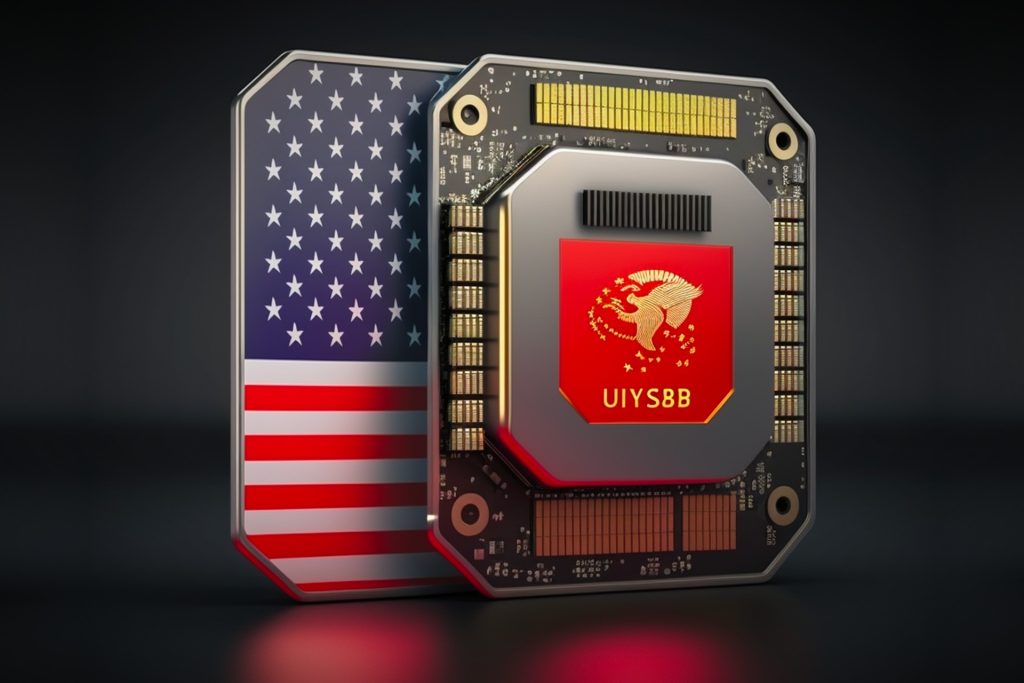
This paper examines the challenges that the United States (US) and the People’s Republic of China (PRC) will face following the implementation of new sanctions by the US on the Chinese chip sector to prevent the acquisition of technology necessary for the PRC to manufacture state-of-the-art chips. With these actions, Washington intends to freeze Chinese technological development at a certain level to maintain the advantage it possesses. However, such measures encourage Beijing to develop an industry that is less and less dependent on the outside world and threaten to damage US relations with both the PRC and its allies because of its dependence on the latter to effectively implement these restrictions.
Climate Change: Intrinsic Relationship to Security and Defense
By: Víctor Miranda Alfaro (18/01/2023).
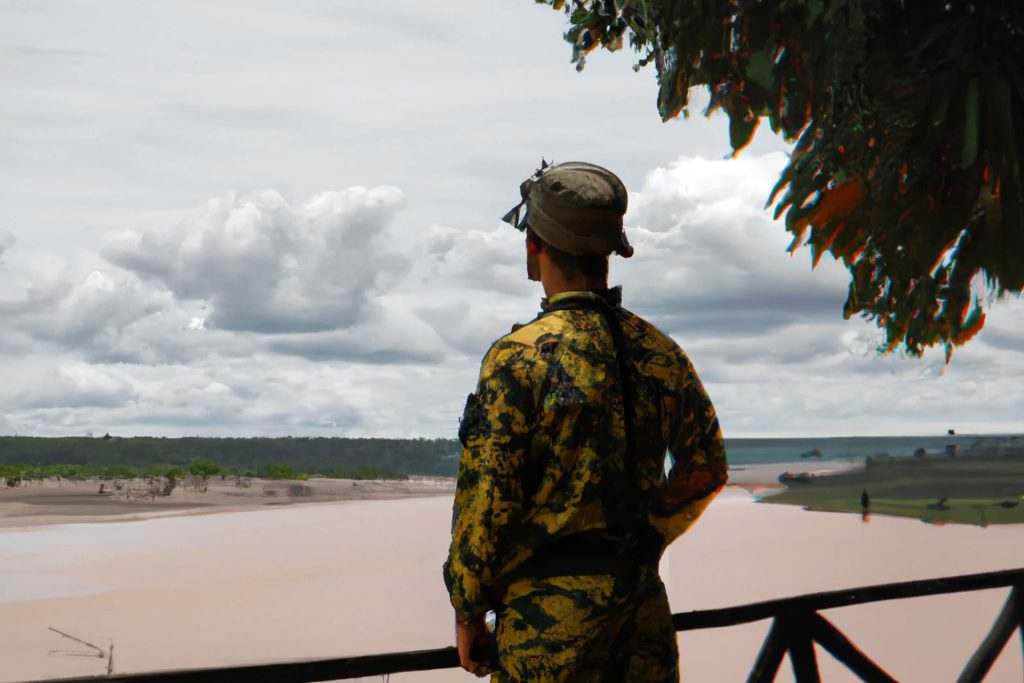
Considering what John Kingdon calls a “window of opportunity,” this article analyzes the participation of the Peruvian Armed Forces, particularly the Army, in the development and protection of the Amazon and the environment in order to strengthen State capacity for the benefit of the most vulnerable. In this sense, the State’s commitment to emergency prevention, the strengthening of social peace and development provides a solid basis for addressing -institutionally- climate impacts and exploiting synergies. Only through a transversal articulation of climate and environmental protection, safety and national efficiency strategies will a significant impact be obtained.
Fighting Illicit Financial Flows in the Americas

By: Celina Reayulo (10/01/2023).
Illicit financial flows present a threat to the political, economic, and social development and security of countries around the world, particularly in the Americas. Dirty money serves as the lifeblood for illicit networks that include terrorists, criminals, traffickers, and their facilitators, and provide a window and a vulnerable entry point into these illicit organizations. Money laundering and terrorist financing enable terrorist groups and transnational criminal organizations to conduct their operations and promote their evil agendas which contribute high levels of insecurity and violence across Latin America. Armed groups in the Americas have become increasingly powerful and wealthy, undermining legitimate economies and democratic institutions. Over the past 20 years, governments have increasingly employed “following the money trail” to better understand, detect, disrupt, and counter illicit networks but must continue to keep abreast of evolving threat financing methods to combat criminal and terrorist networks and their illicit financial flows and promote security, prosperity, and good governance throughout the Americas.
Transnational Terrorism in Latin America

By: Mariano López de Miguel (05/01/2023).
Following the horrific attacks of September 11, 2001, in the United States, the international community woke up to what many political scientists and historians called “multipolar chaos.” Two decades later, strategic and security challenges have not been limited and have risen dangerously to global alert levels. With geopolitics once again as a battleground, the horizon of terrorism has expanded or increased in traditionally safe areas, such as Latin America.
Arms Transfers and Major Power Competition in Latin America

By: Roman Ortiz (03/01/2023).
This article analyzes the penetration of Russia and the People’s Republic of China (PRC) in the Latin American arms market, paying special attention to the causes that allowed both countries to increase their sales in the period 2007-2016, as well as the factors that limited the number of recipient countries and the type of equipment delivered. It also analyzes the collapse of military exports from Moscow and Beijing to Latin America during the last five years. Based on this trajectory and the effects of the war in Ukraine, it is concluded that the prospects for the Russian and Chinese defense industries are markedly different. While Moscow could see its presence in the Latin American market disappear irreversibly, Beijing is likely to take advantage of several factors in its favor to increase its sales to the region in the coming years. This increase in arms transfers from the PRC to Latin America could have a substantial impact on the hemispheric geopolitical balances. To this end, the analysis of the evolution of the Latin American defense market, as well as Russian and Chinese military exports, has been based on information on arms transfers from the database of the Stockholm International Peace Research Institute (SIPRI).
Connectivity Conflicts and their Effects on Ibero-American Security

By: Andrés González Martin (27/12/2022).
American hegemony has ushered in a multipolar world in which great powers compete by applying a defiant punitive unilateralism, significantly more dangerous. Simultaneously, the rivalry between the great powers in the economic and technological fields has caused a decoupling movement in globalization. This has resulted in a global restructuring based on the struggle between the People’s Republic of China and the United States. On the one hand, connectivity has become a double-edged sword. The new form of warfare is the use of any network or flow as a weapon. On the other hand, globalization has provided a new arsenal of instruments of war such as sanctions, boycotts, export controls, tariffs, import prohibitions, or illicit appropriation of intellectual property that make it possible to attack all kinds of interrelationships. In this sense, the current state of the world has broken down the existing barriers between security and business.
Russia in Latin America: Variable Geometry of a Secondary Actor with Protagonist Aspirations
By: Carlos Malamud Rikles y Rogelio Núñez Castellano (22/12/2022).
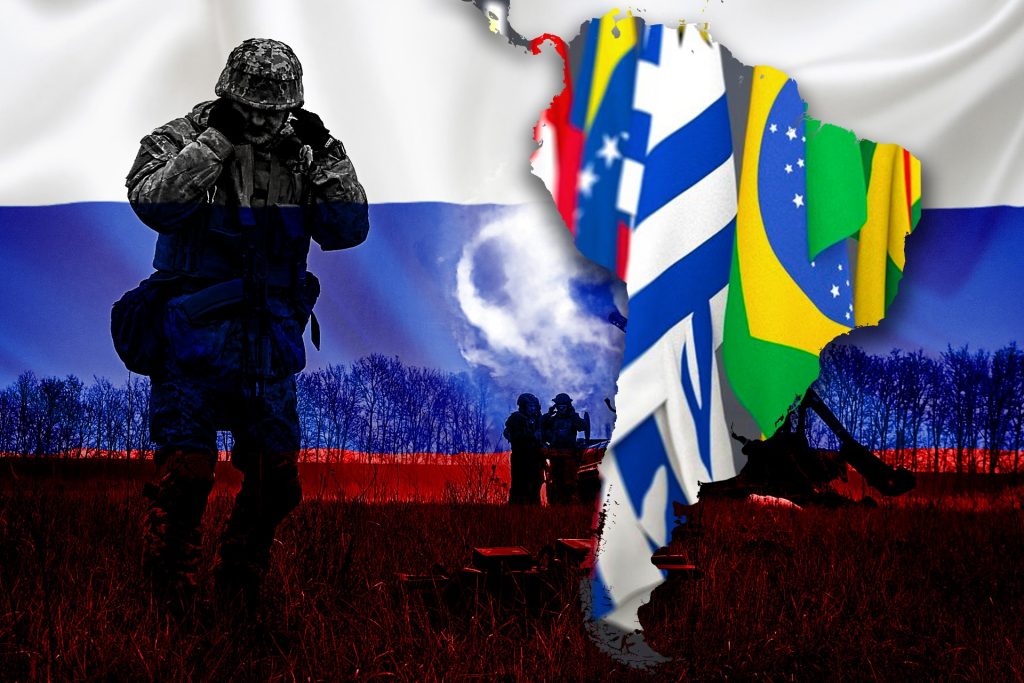
Russia’s role in Latin America is framed in the changing global geopolitical context. Its renewed role in the region since 2008, reinforced following the invasion of Ukraine, is linked to that conquered by other emerging powers. Latin America perceives Russia as an option to diversify its international and economic-commercial relations, and break its historical dependence on the United States, as well as the current one with China. Moscow, however, has contributed to the fragmentation, polarization, reprimand, and subordinate position of the region. In the medium term, Russia could see its regional room for action reduced due to the growing Chinese potential and the authoritarian drift of Vladimir Putin’s regime nullifying Moscow as a possible ally for most Latin American countries.

